
Editor's Note
This piece is excerpted from Heinrich Wang's book Ming Bai Xue (明白學 — The Art of Clarity, published by Locus Publishing).
It begins in a crystal factory showroom in the Czech Republic, in winter — with a young Russian man and a set of broken wine cups. What Wang witnessed that afternoon changed how he understood the word "heirloom." Not an antique. Not an expensive collectible. But an object capable of speaking across generations — of carrying, in its form and in the memory of being used, the warmth one generation holds for the next.
That understanding became the philosophical foundation of NewChi Porcelain's Heirloom Series, and the design origin of Glory Across Directions — limited to 333 pieces worldwide.
What follows is Wang's original text, excerpted from Ming Bai Xue (Locus Publishing).
I. A Story from a Crystal Factory
Every act of creation has a cause. Something moves you, and from that movement, a chain of ideas begins.
Ten years ago, on a frozen winter day, I arrived at the small Czech spa town of Karlovy Vary — famous for its glass-cutting and engraving craft — and sat in the showroom of the Moser crystal factory, discussing a prototype commission over a set of design drawings. The warmth of the room made it easy to be unguarded, a little inattentive. Then a young Russian man walked in — tall, in his early thirties, urgent in his manner. He was holding a photograph. He had come to ask the factory to reproduce two high-stemmed wine cups from a design discontinued more than forty years ago. The factory was hesitant — the original molds were long gone. But when the young man made clear that cost was no concern, they agreed to find a way, to build new molds and complete the work.
He had already contacted them in advance. But he had still flown all the way from Moscow — just to confirm in person that the wine cups his grandmother had left behind, the ones accidentally damaged, would be restored to exactly the memory and beauty they once held.
I sat to one side and watched, moved by the unbroken warmth that connected one generation to the next through this single object. And I understood, for the first time with real clarity, that the wine cup was a carrier — a vessel through which a family transmitted affection, taste, and something of itself along the line of its blood. That afternoon in Karlovy Vary gave me an entirely new understanding of what we call a "family heirloom," and a new appreciation for the minimum that a truly fine object must be worth.
In our cultural tradition, we have always hoped our children would become dragons and phoenixes — always held our highest wishes over the next generation. If a family could have a concrete object that carried that hope generation after generation — something that, like a long-running story, held the emotional through-line of multiple lives, keeping the deep expectations of the senior generation permanently alive and unfaded — that would be a true heirloom. Warmed by wine, gathered together, that cup must have brought the Russian family many elegant and joyful evenings. The grandmother's good taste had produced in her grandson a sense of longing and of care. A piece purchased with no particular intention of collecting or preserving had ended up connecting two generations across decades of time and feeling.
I only glimpsed the cup briefly, but its elegant form and luminous quality left a deep impression. That quality — of beauty that carries value capable of outlasting the changes of time — is what allows an object to be passed down with love across generations. That, precisely, is the value and meaning of a fine object. Without it, there would be no story worth the extraordinary effort that young man made to restore it. And if such an object were designed from the beginning — its imagery laid out with the deliberateness of a screenplay — then the effect that grandmother had achieved without intention might be completed with greater precision: not the accidental, moving story that a souvenir or a fine object sometimes produces by chance, but the meaning of an heirloom, fulfilled on purpose.
II. What an Heirloom Must Be
An heirloom is an object of benevolence, carefully chosen by a senior generation. Its value should never be reduced to the price a rare artifact might command. On one hand, it must be capable of carrying unlimited wishes and blessings — the Confucian standard being nothing less than gewu, zhizhi, chengyi, zhengxin, xiushen, qijia, zhiguo, pingtianxia (investigate things, extend knowledge, make the will sincere, rectify the mind, cultivate the self, regulate the family, govern the state, bring peace to the world) — hoping that descendants will carry themselves with dignity and uprightness, with generous and tolerant hearts, with the conduct of those who know propriety. The blessing is for great fortune and auspicious momentum, for a body that lives long, for a life that proceeds in safety and peace. On the other hand, the object must be rich in creativity and beauty — in novel imagination, in joyful atmosphere, in good design; in distinctive craft, in pleasing color, in refined texture. On its surface, it must contain the elements that make it worth cherishing.
And further: it should not merely be placed and looked at. It must be used. Just as that grandmother's wine cups brought experiences worth remembering again and again — calling up the scent of good evenings past, whenever they were lifted — only an object of genuine quality, with a meaningful message and a well-considered function, can work on those around it gradually, in the composed and graceful atmosphere it creates, transmitting the good taste and good conduct that a senior generation's care makes possible. Place one such object in your life today, and over time it becomes a presence: as if the voice of a parent or grandparent were still there, still watching, still offering encouragement — helping you know when to advance and when to hold back, and to move through the world with ease.
These objects leave unforgettable memories of a time and a place. Long interaction with them produces a feeling of being understood and valued — of being, at each encounter, encouraged and blessed.
What genetic elements must an object carry to become a classic passed down through family generations? Certainly auspicious meaning, vivid imagery, elegant bearing, and perfect craft — these qualities together elevate the heirloom beyond the merely fine, and through the considered character of the work, carry good taste from generation to generation. And only good taste can cultivate the habit of cherishing what one has been given.
Every piece, whatever its scale, should aspire to a density of creativity and craft worthy of being passed from one generation to the next. The creative logic of the Heirloom Series must be rigorous and multidimensional: how to hold, today, the love that will become tomorrow's memories of the past.
III. The Beginning of the Design: "Stand the Way a Person Should Stand"
The first necessary elements to instill are the principles and values that an entire culture shares regarding what a family is for — its function, its standards. An object that carries these within it becomes a Heirloom Series work in the truest sense, because it contains the rules of the household: the expectations and the care of a senior generation. This is a creative premise entirely different from ordinary design.
In our society, where Confucian thought remains the primary moral reference, the home — alongside school — is the most important place where the understanding and practice of ren (benevolence) and li (propriety) are formed. The generosity and tolerance to love others; the discipline to know when to step forward and when to step back — these are required and practiced at home. Loyalty and integrity carry a family line forward; learning and literature sustain its affairs across generations: this is the minimum creative genetic code.
Family culture — jiafeng — has its own standards, principles, and integrity in each household: the values of ren and the tradition of li, necessarily continued through bloodline and upbringing, in positive dialogue with the values of the broader community. The heirloom is the object that carries family warmth, taste, blessings, memories of time and place, and family culture — passing from generation to generation what is beneficial to character, to the world, to the integrity and the will.
The guidance and demonstration of an attitude toward life and living is naturally the responsibility of the senior generation. Courage, accountability, responsibility — these culturally correct values must become the basic elements of the design. Every piece in this series uses feet of some form, the body lifted from the ground, so that each work carries the bearing of someone who stands fully upright and faces the world — the posture of one who meets problems with head raised. That quality of standing apart, of the chest lifted and the back straight, transmits confidence and strength.
As the elders used to scold us in childhood: "Stand the way a person should stand." That teaching now begins in the external form of the object, guiding an inward invigoration of the spirit. The gravity of its bearing produces self-discipline and rigor in those who live alongside it — a constant reminder of the minimum standards expected, in one's state of mind and in one's conduct.
And so from tender blessing and earnest expectation — carrying family warmth and family culture through different materials and forms — comes the heirloom made to measure under a Confucian design logic. This is different from the heirlooms left by earlier generations: those were formed by accident, by chance encounters, their value in transmission primarily material. The Heirloom Series, from creation to ownership, is entirely intentional — designed to transmit more of the emotional care, and more of the considered expectation, that one generation holds for the next.
IV. Glory Across Directions — The Deepest Wish
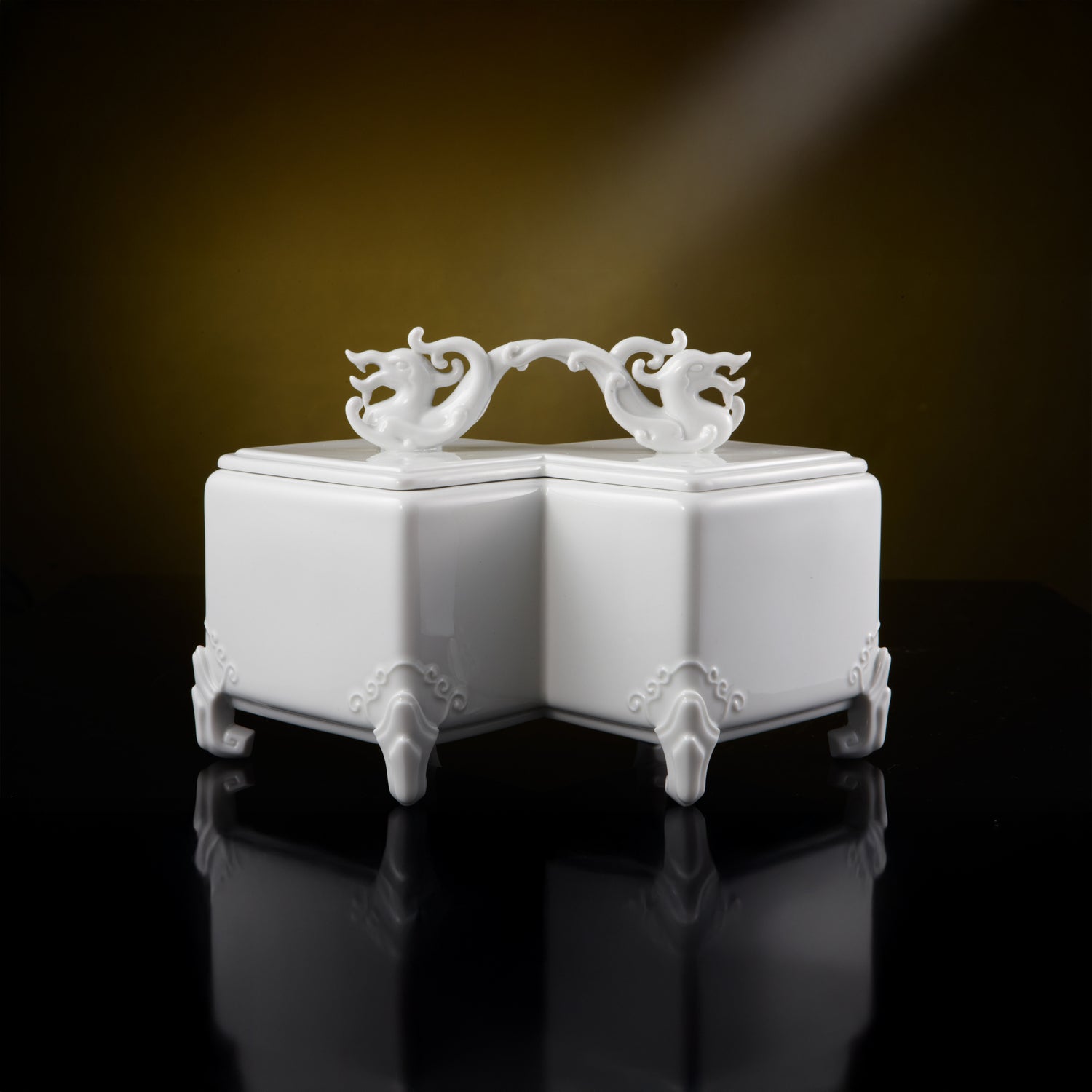
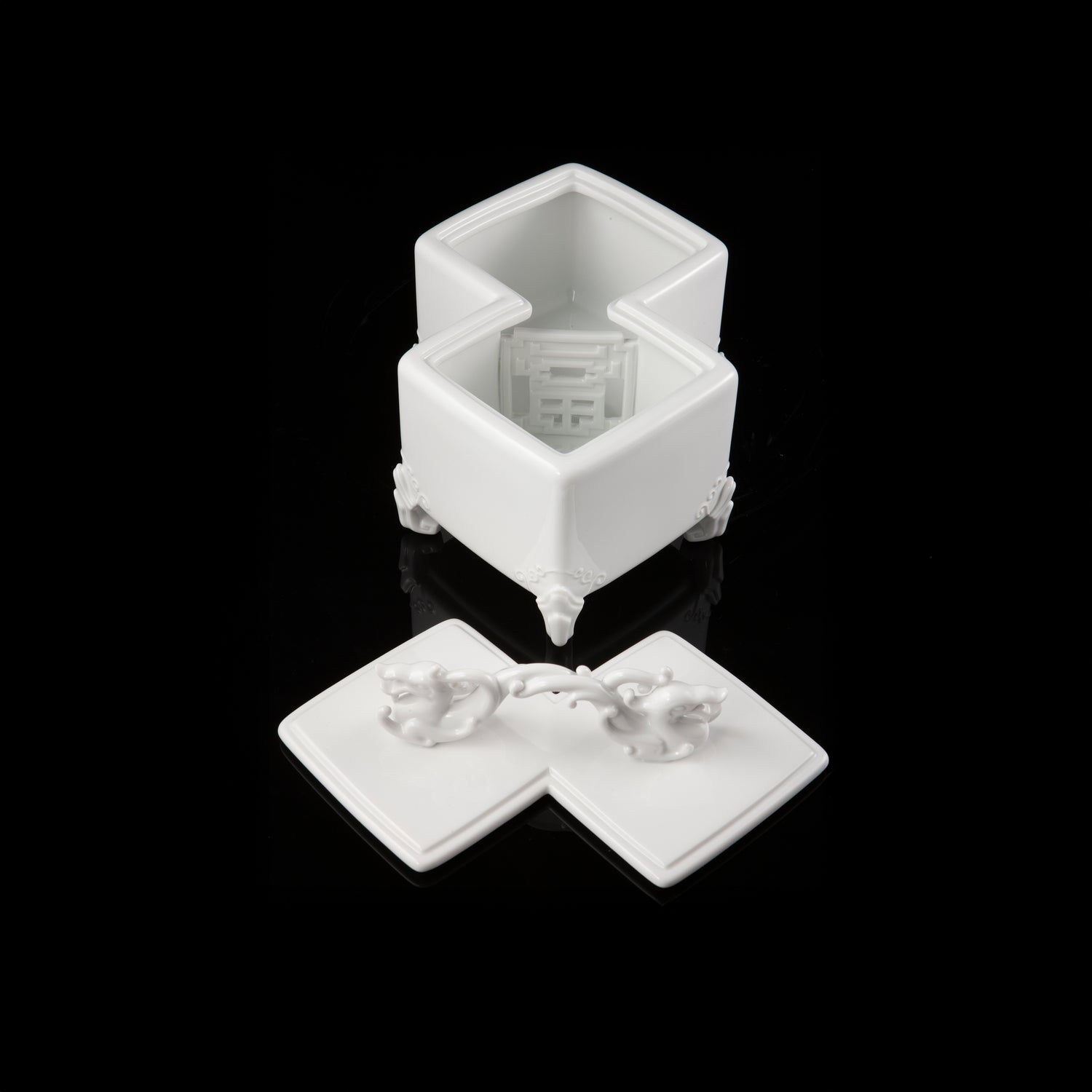
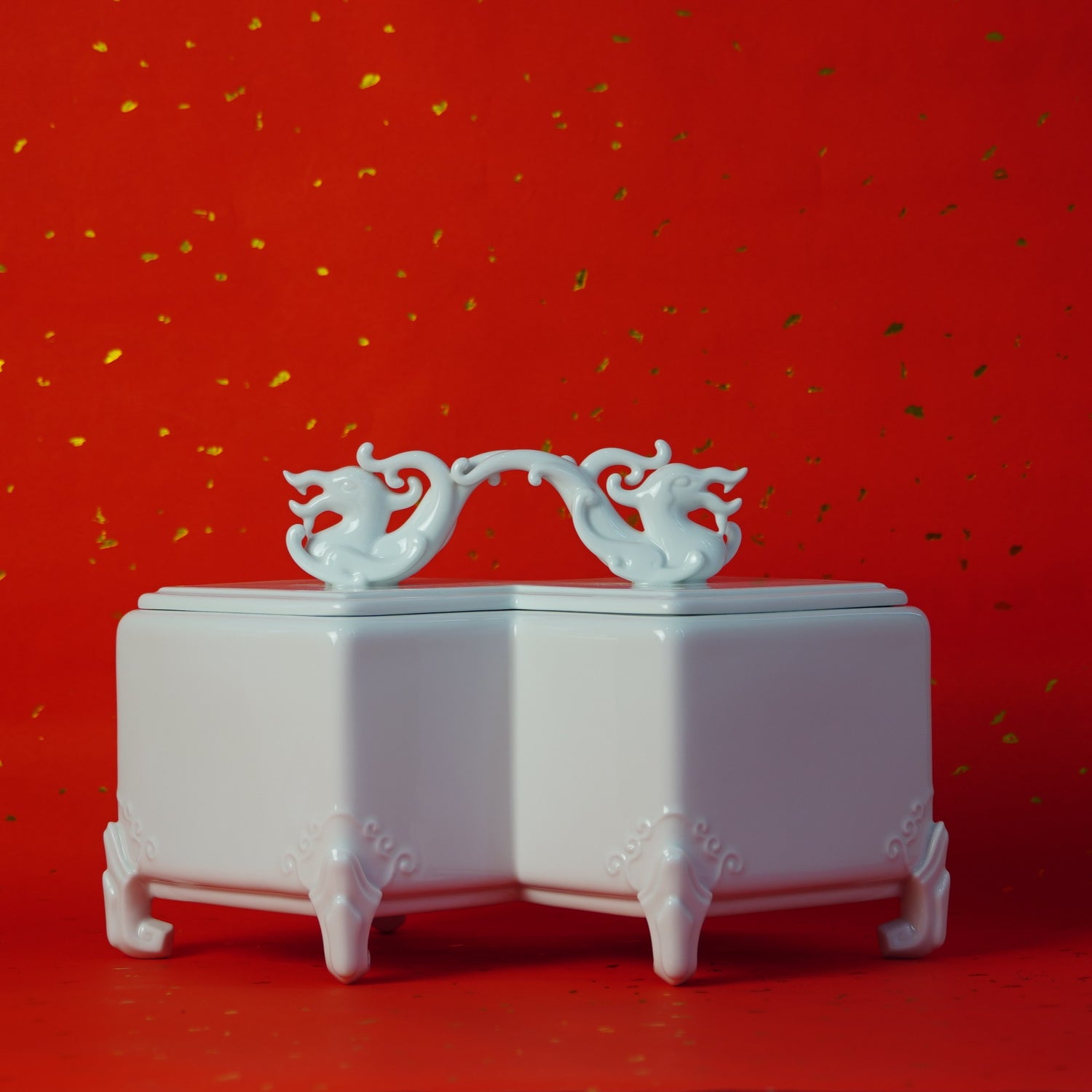
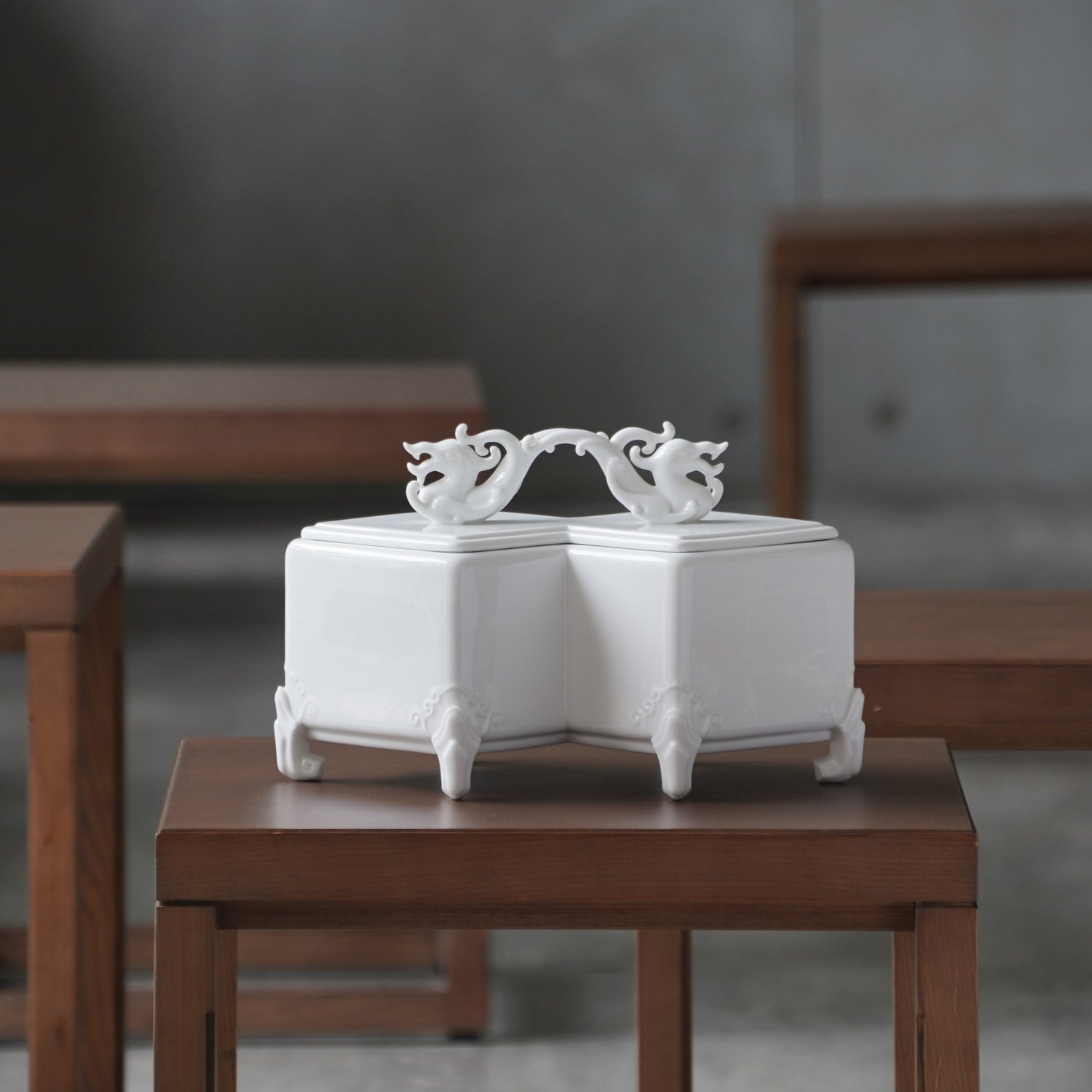
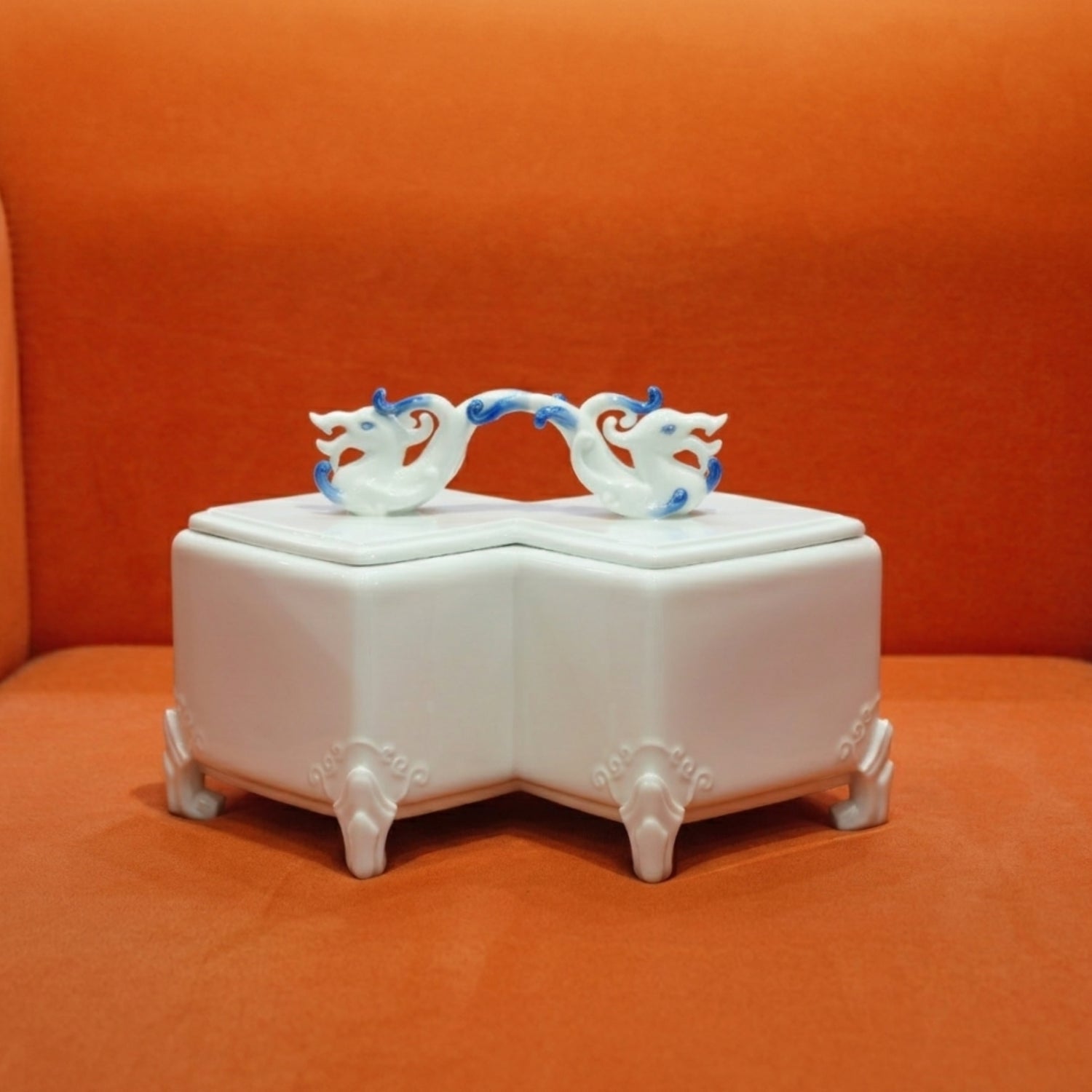
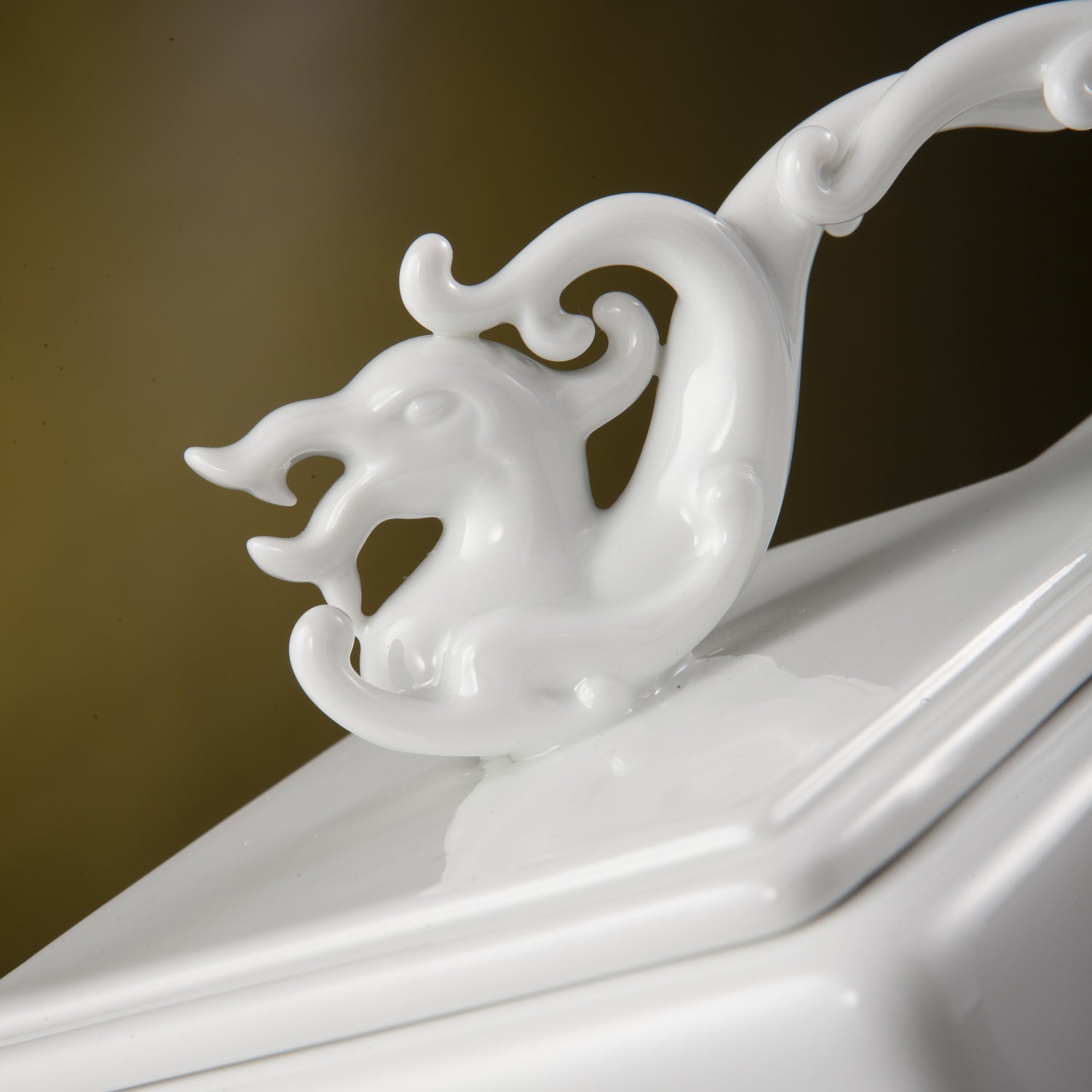
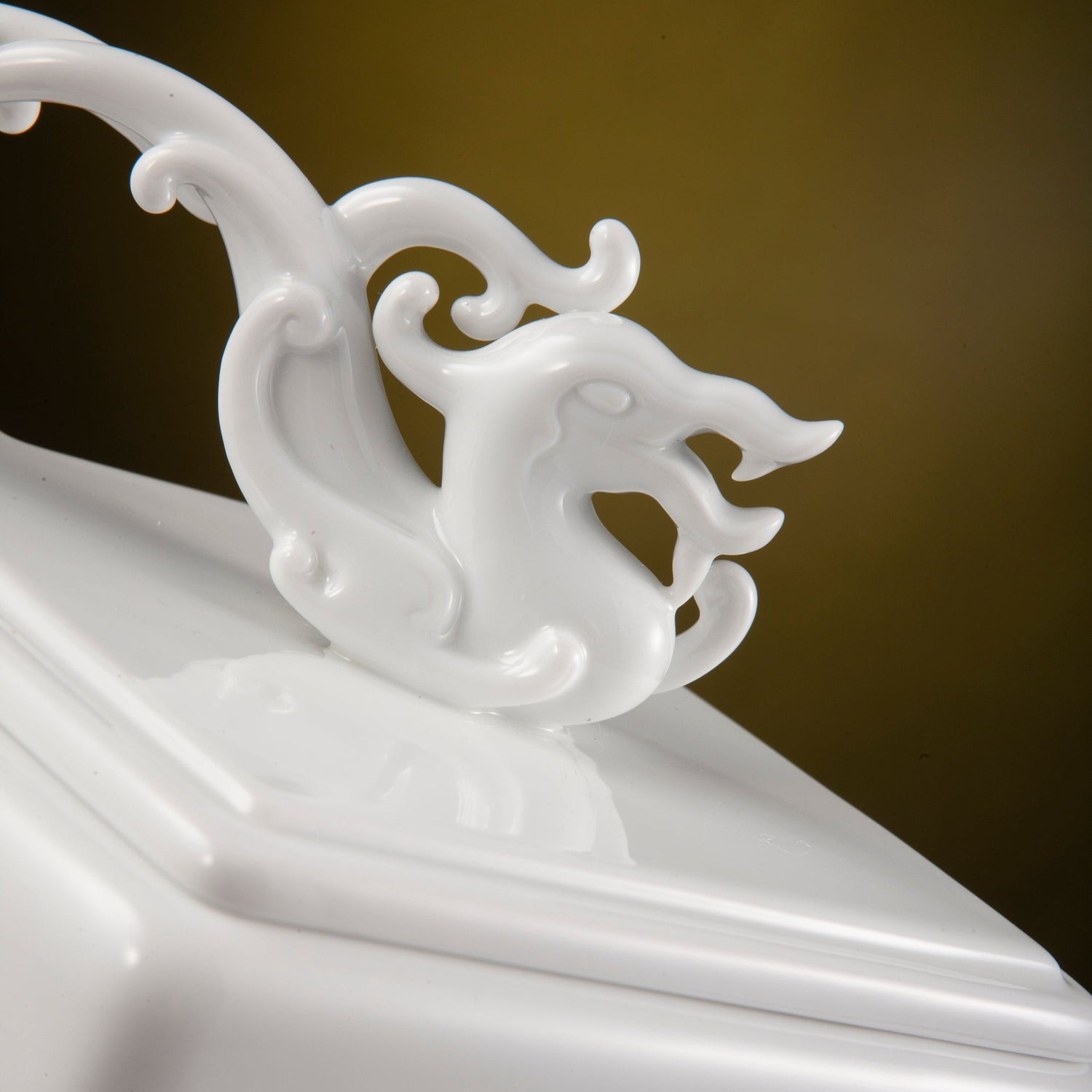
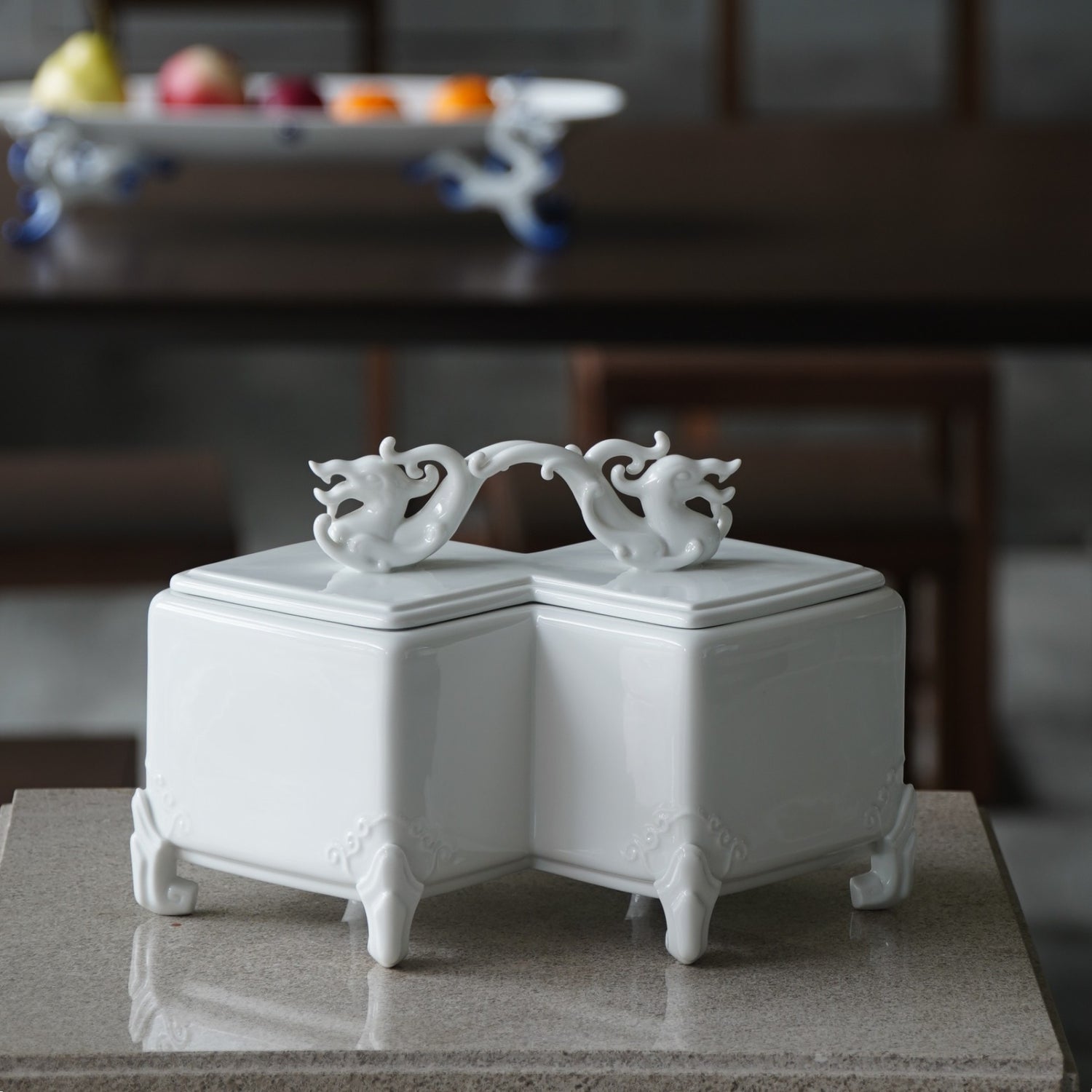
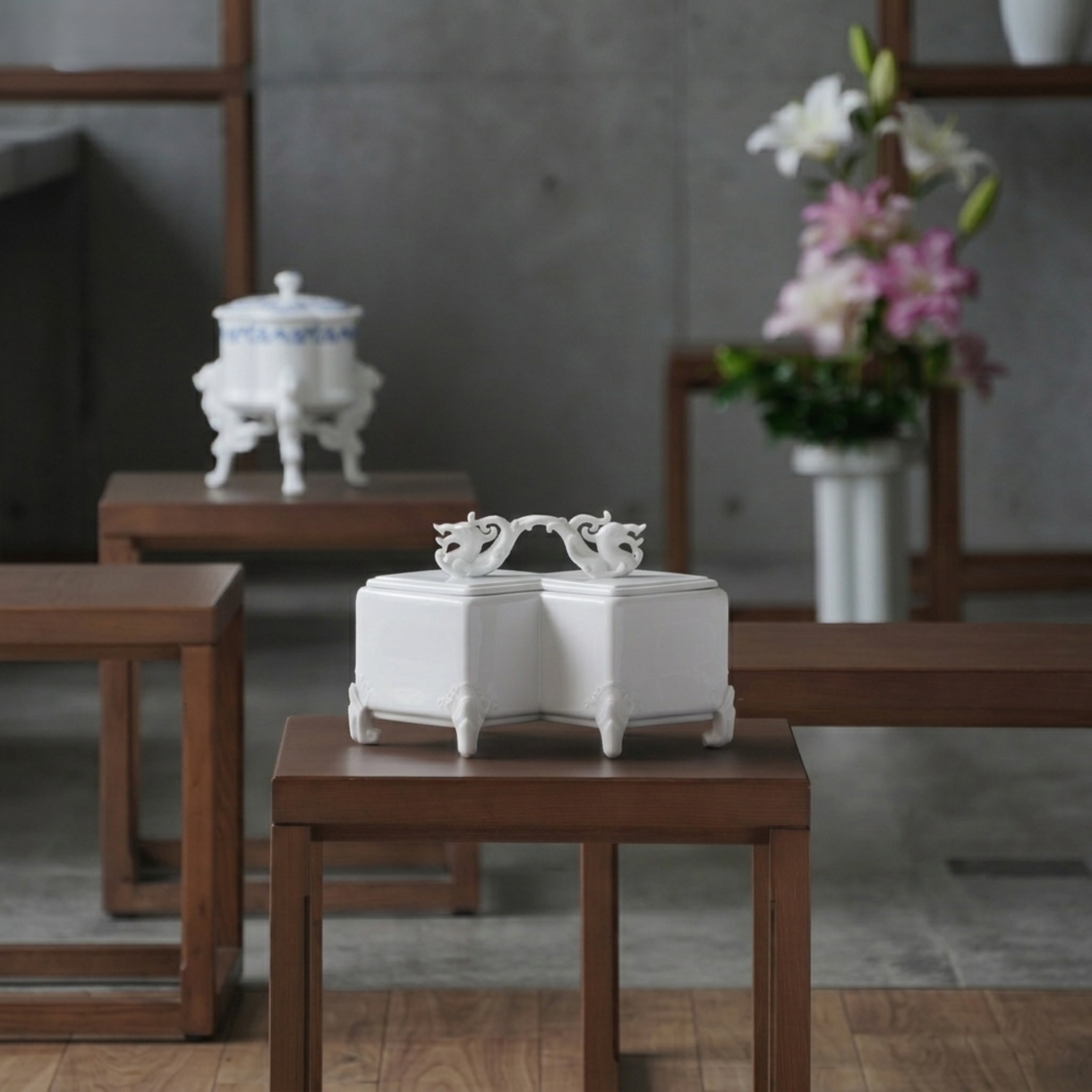
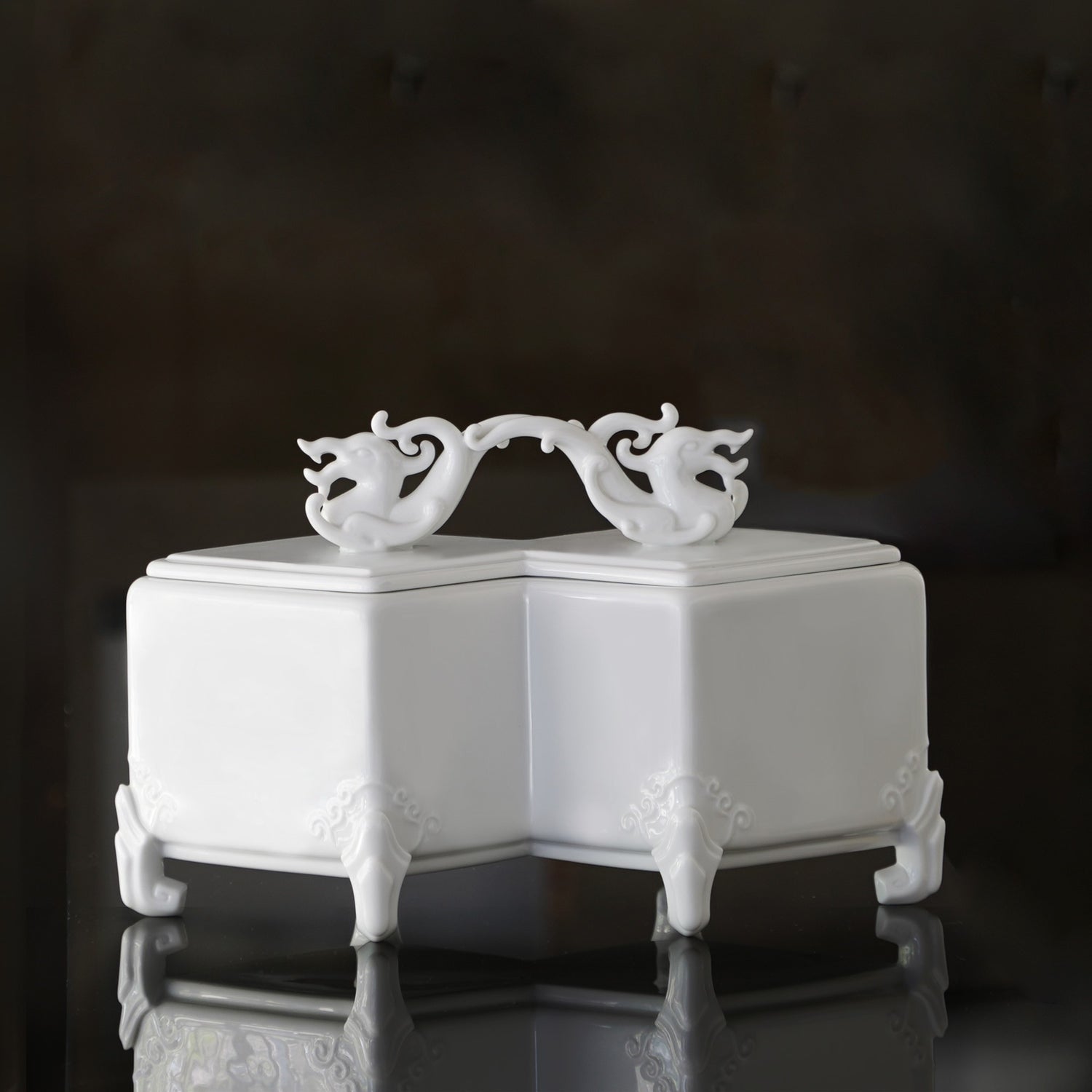
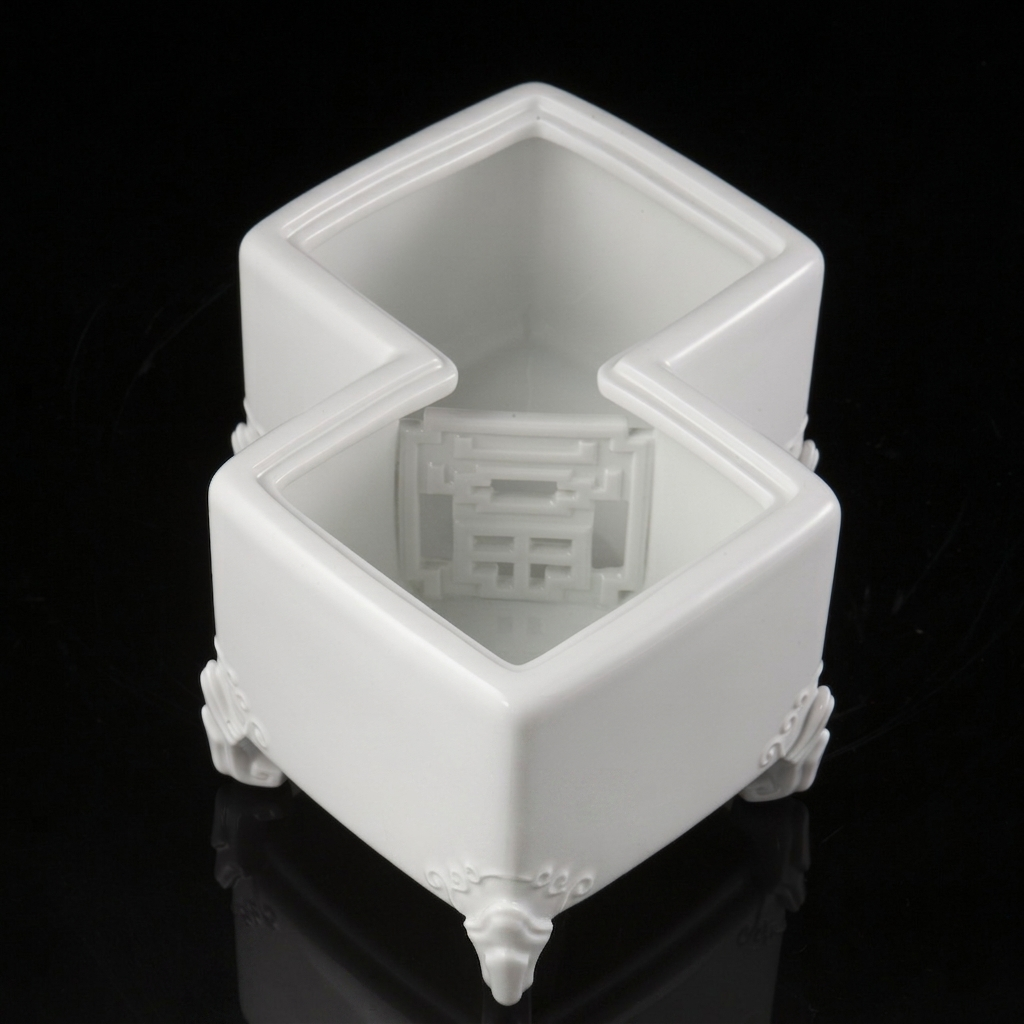
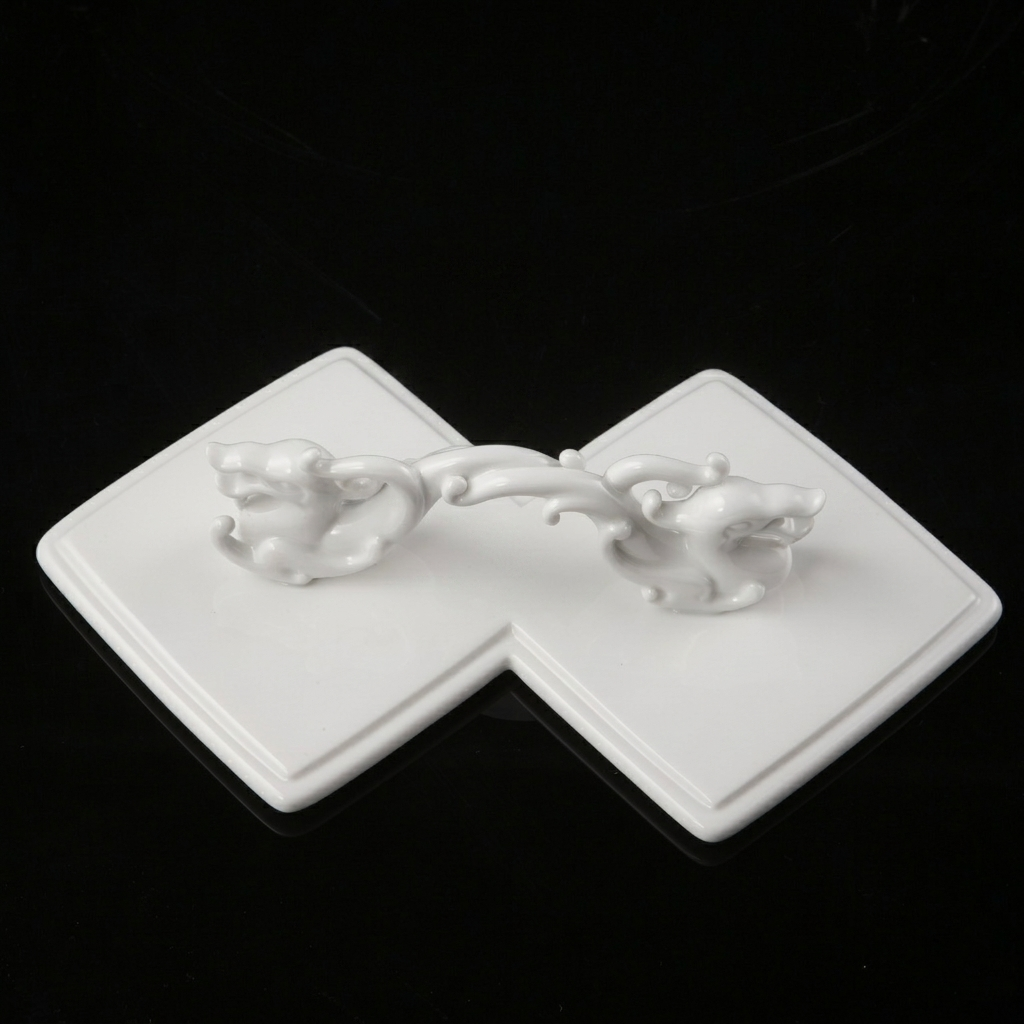
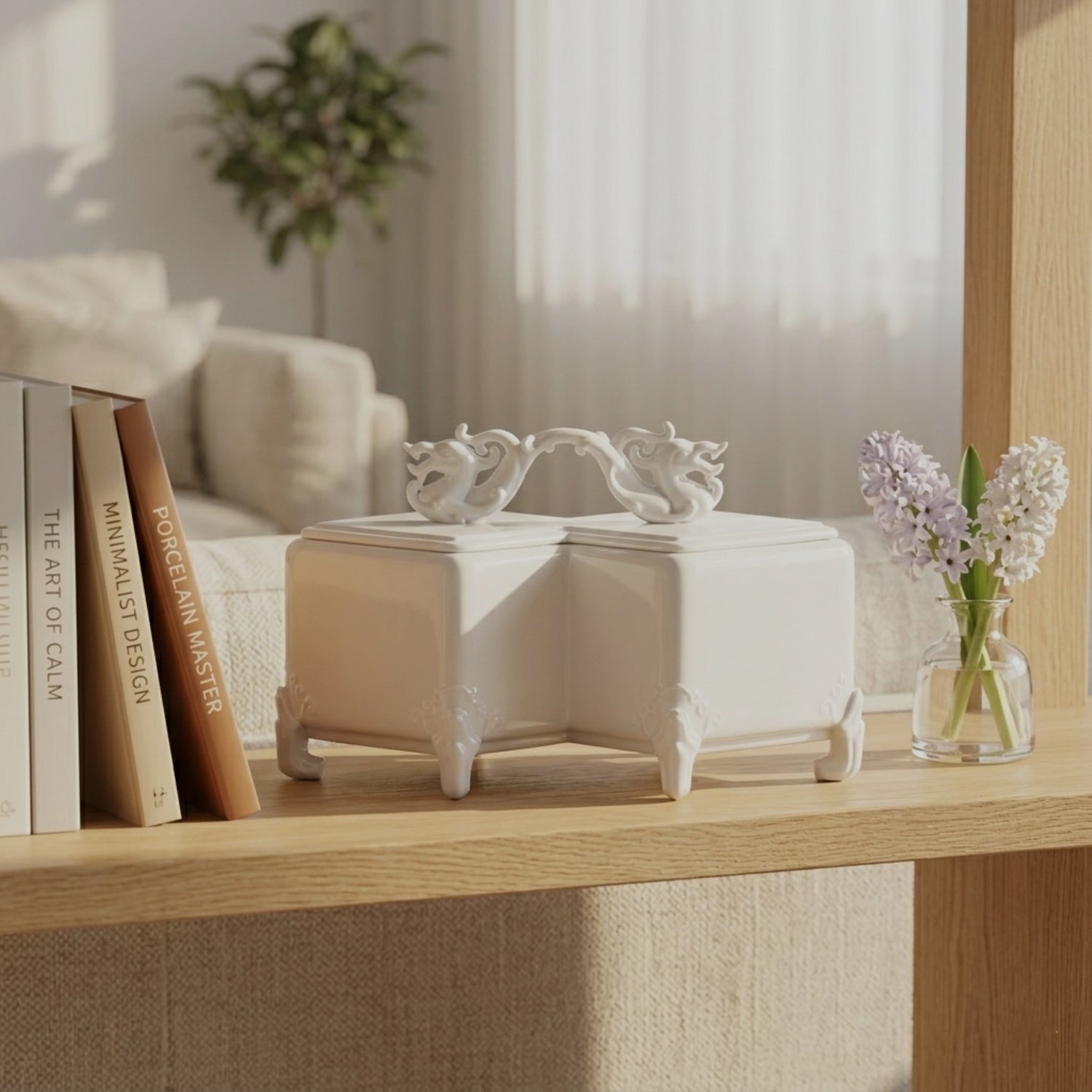
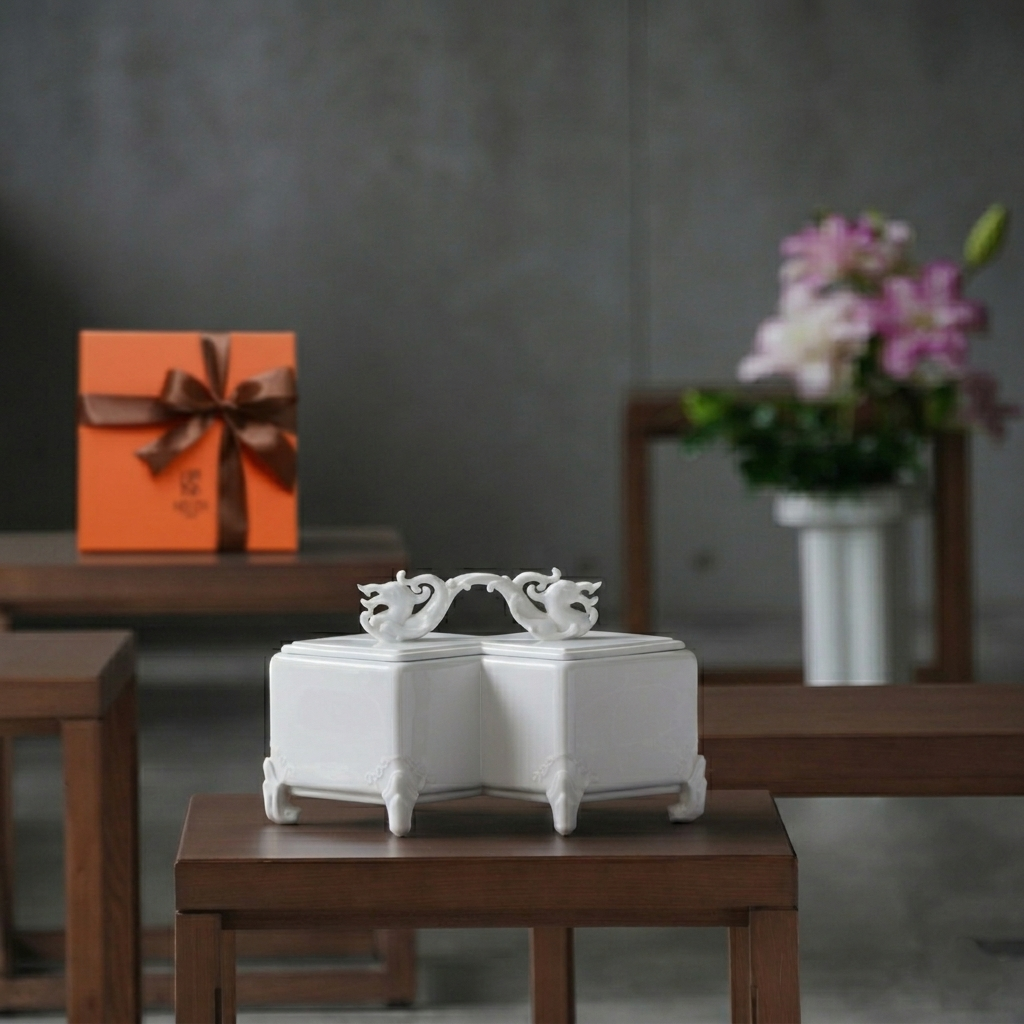
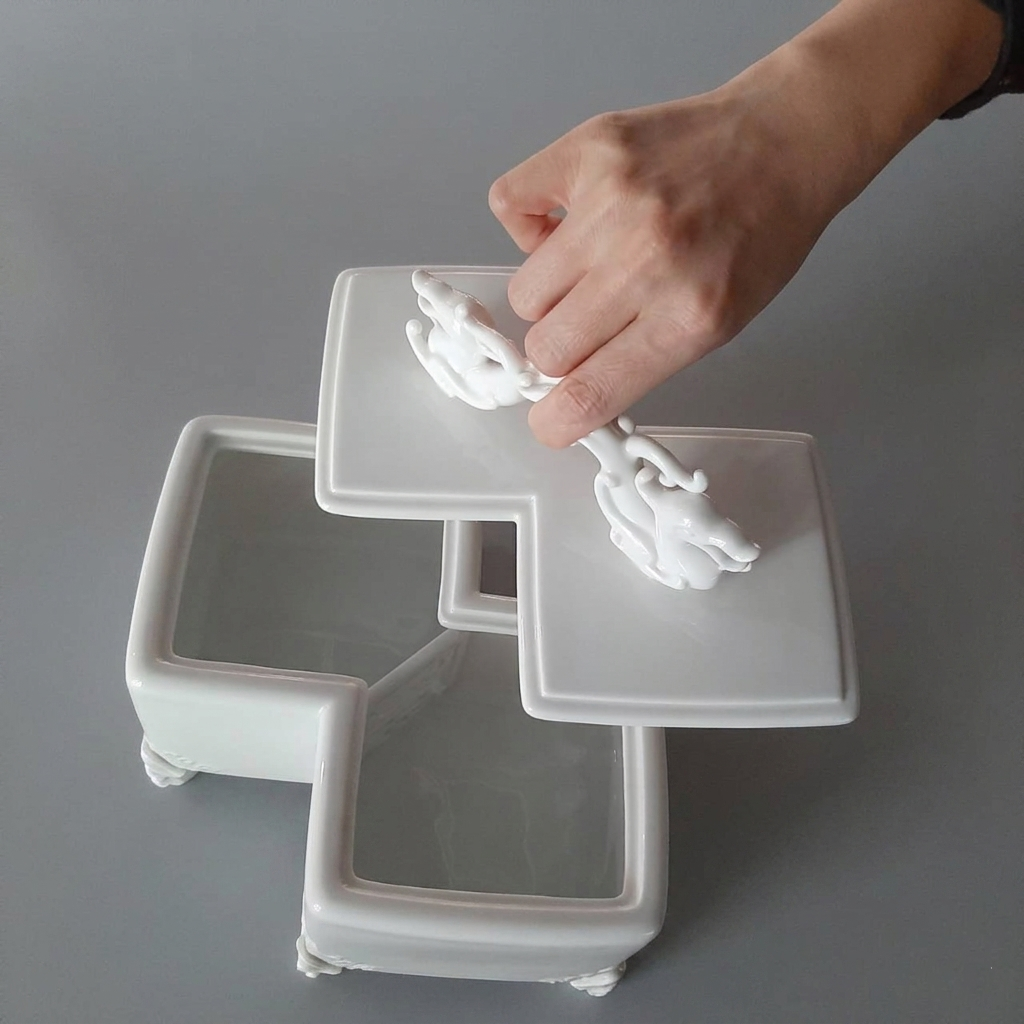
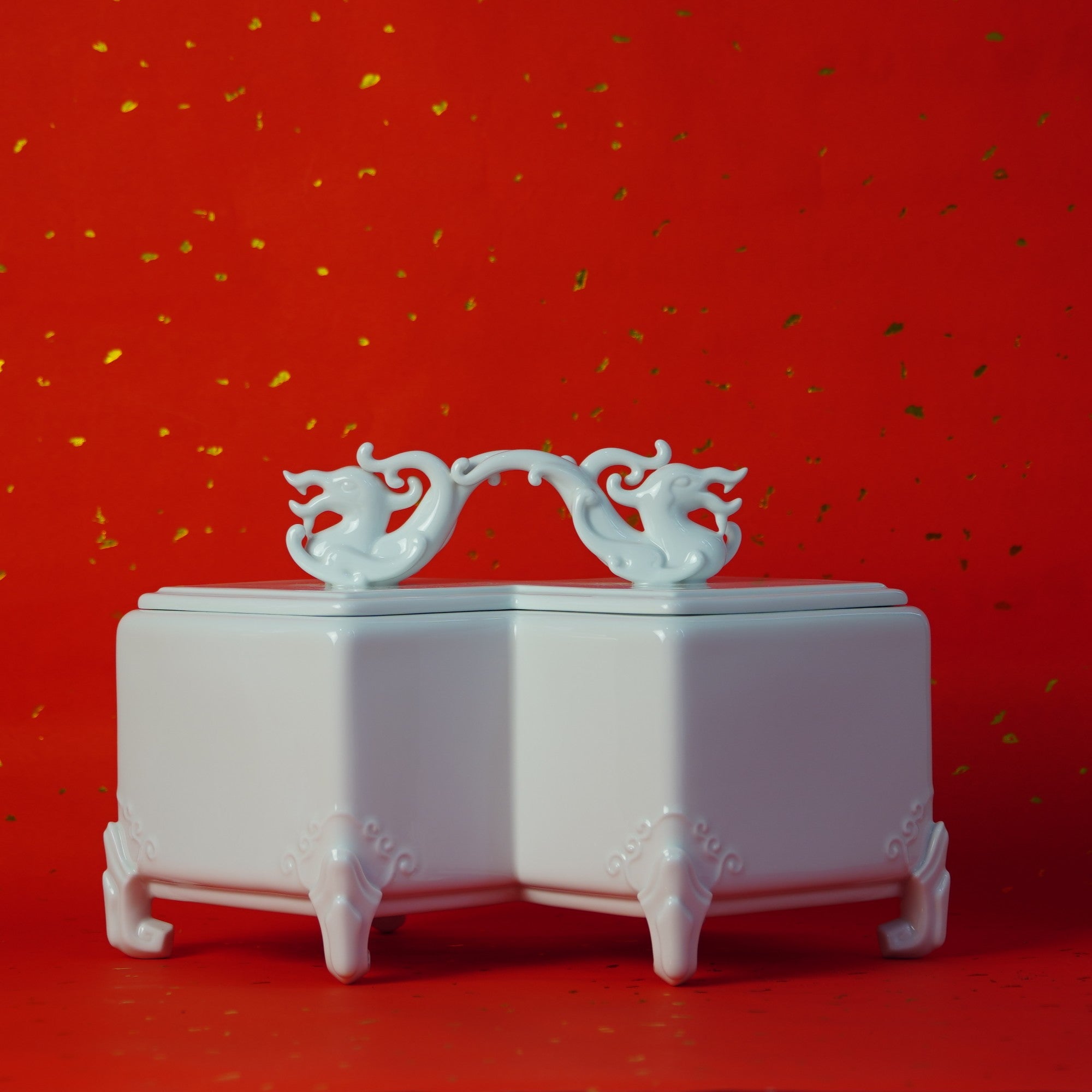
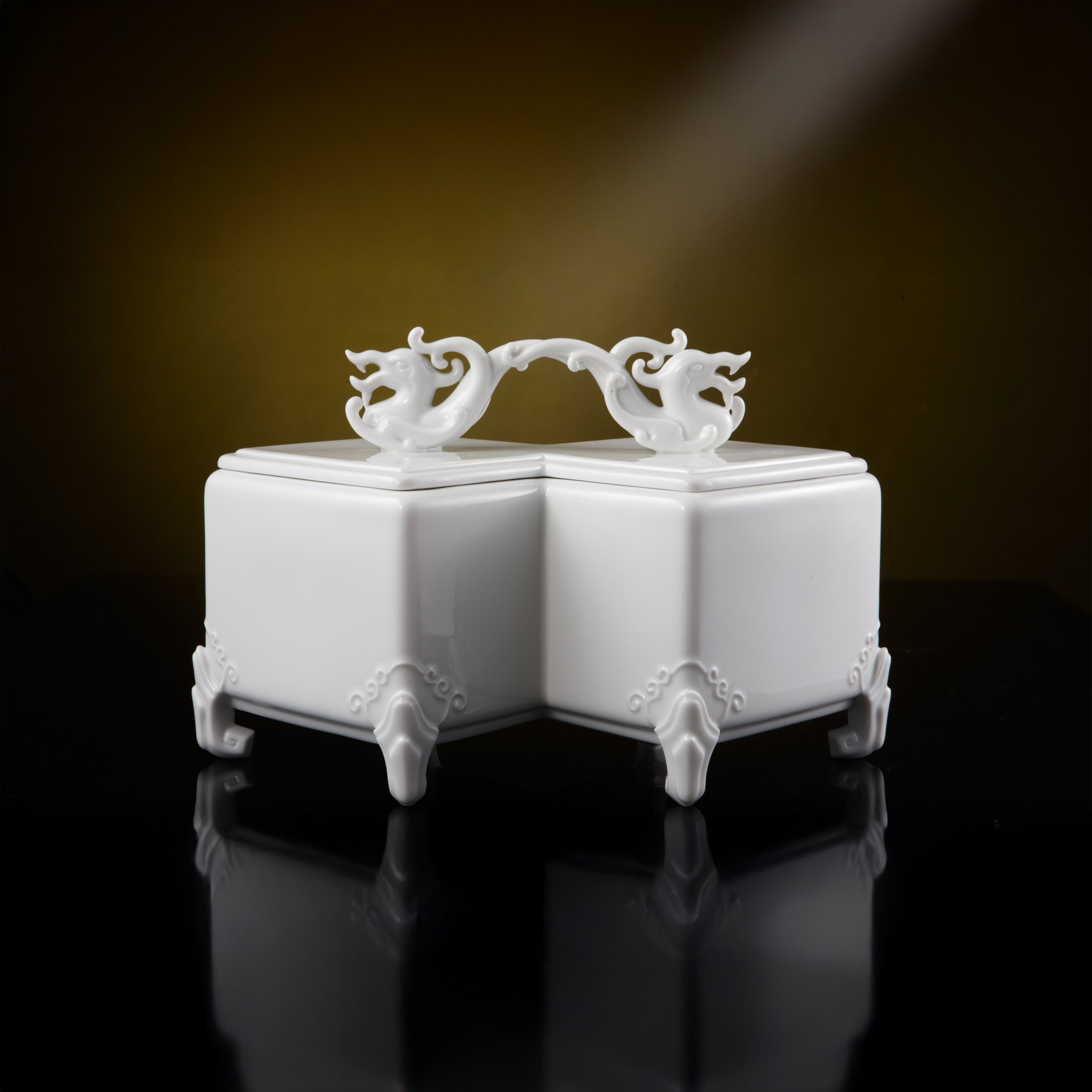
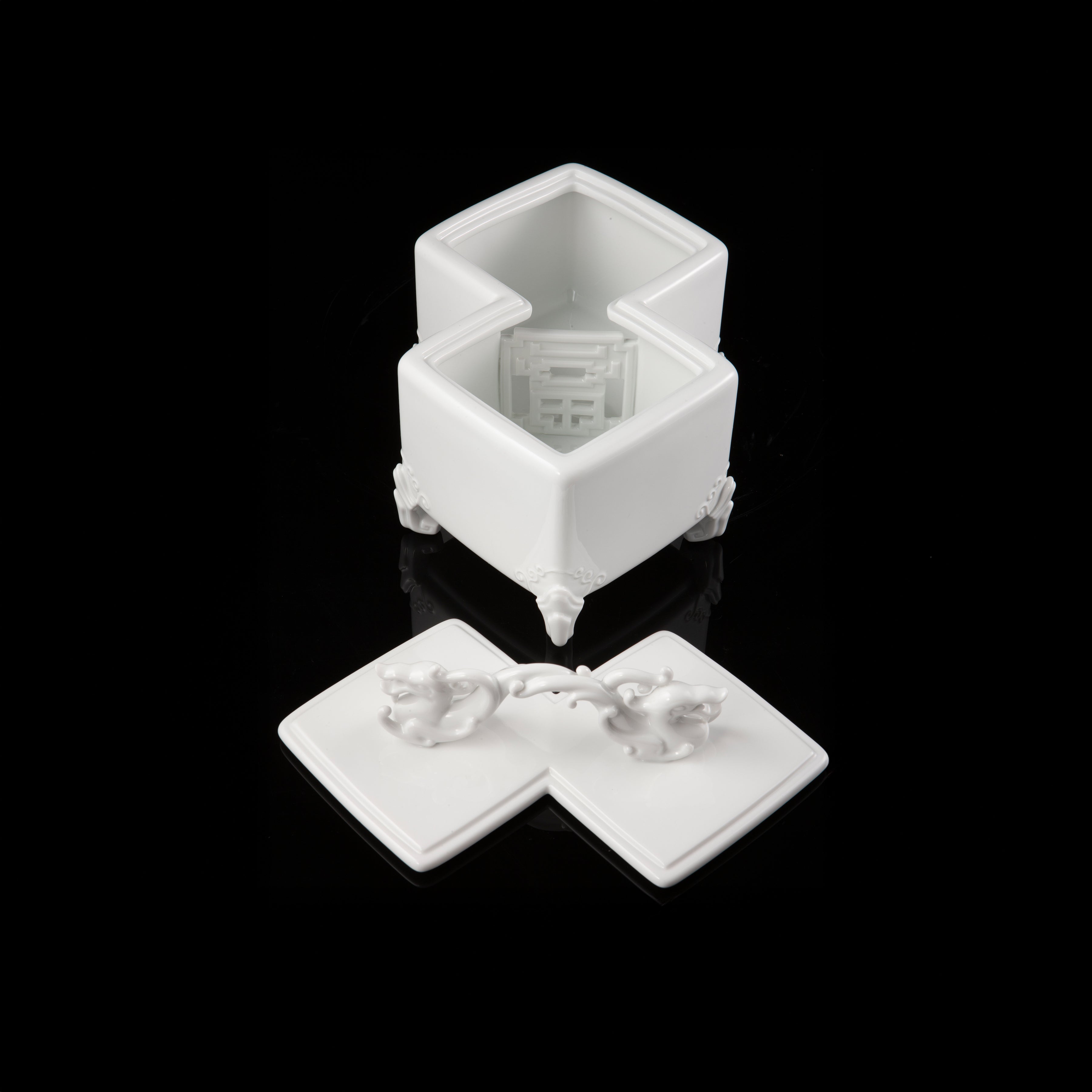
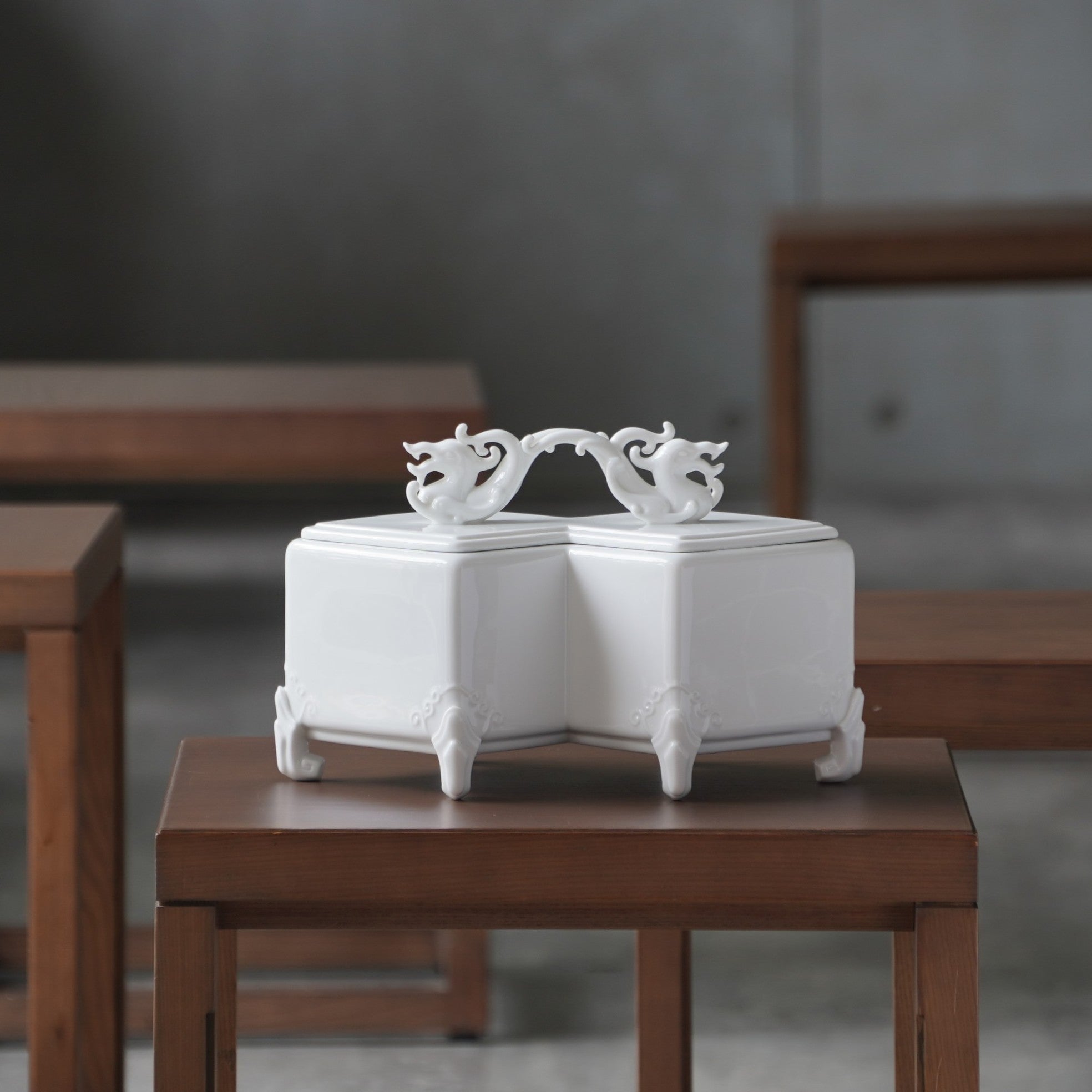
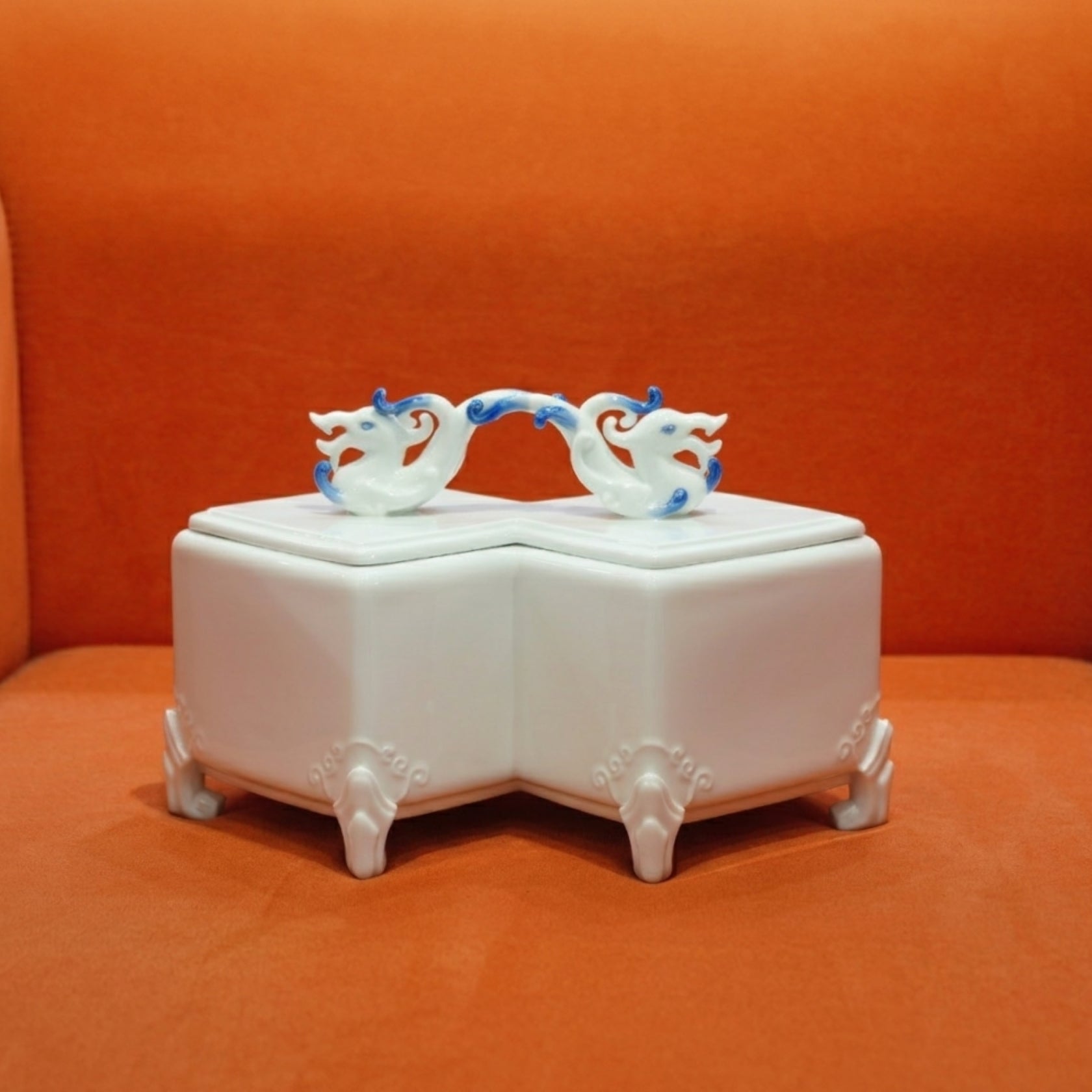
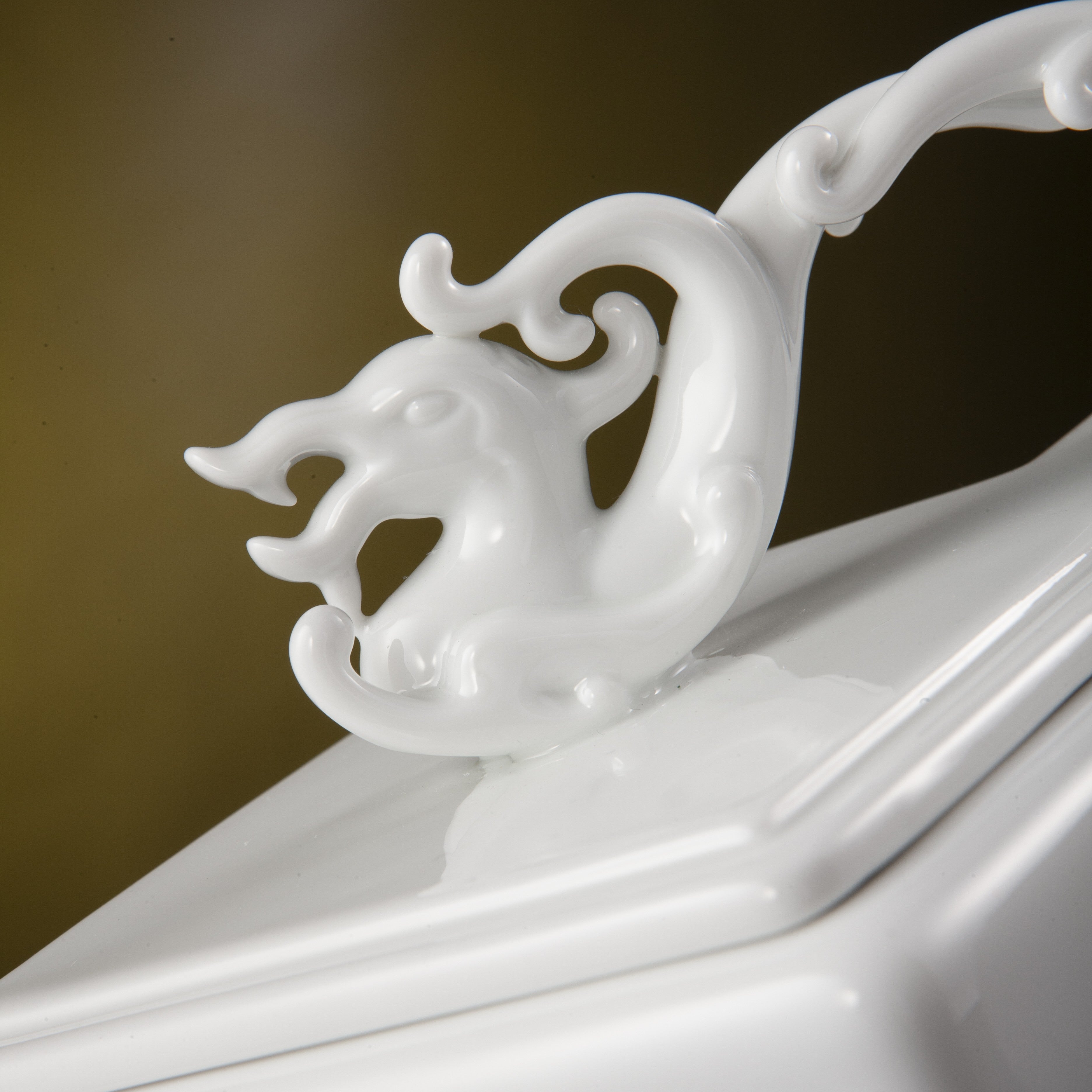
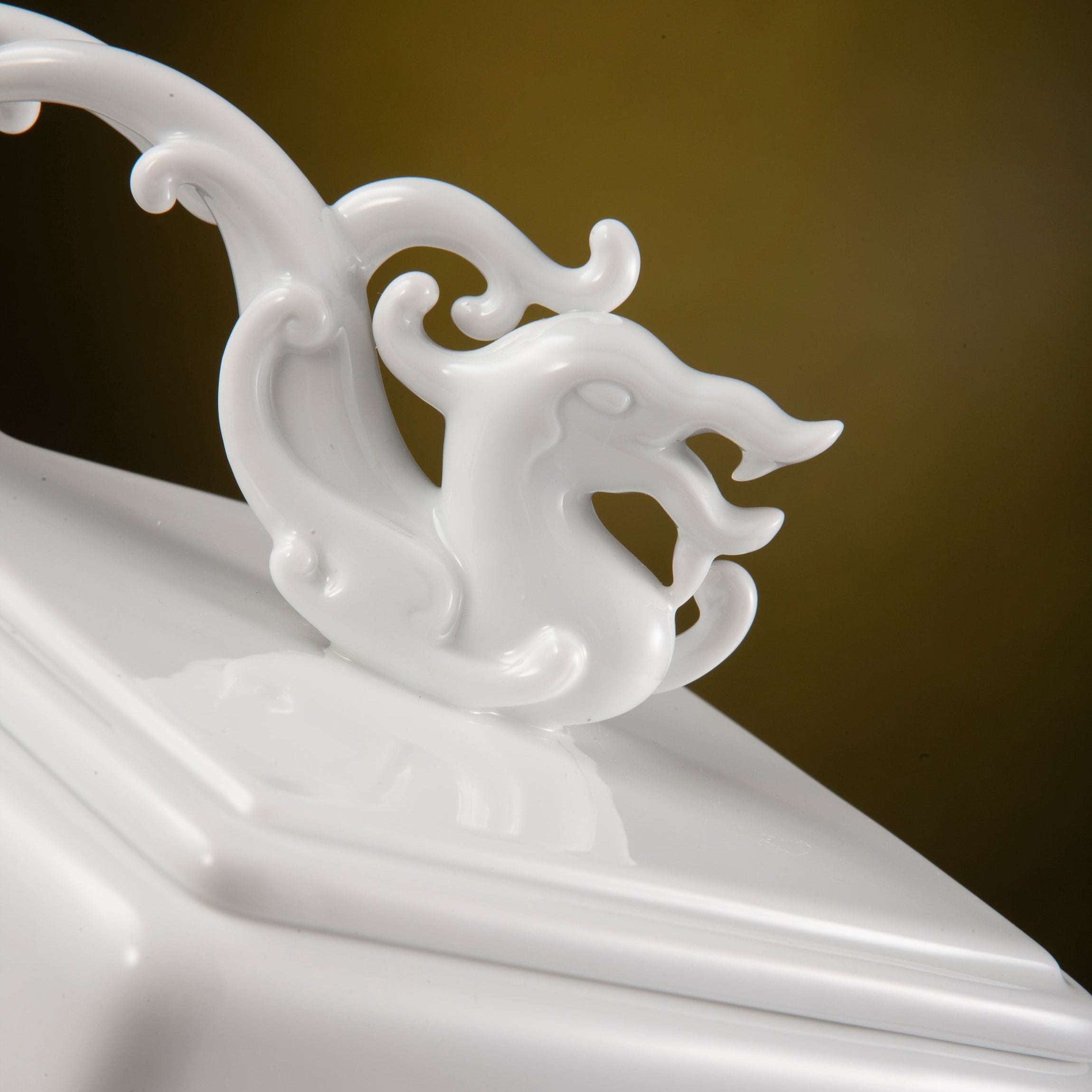
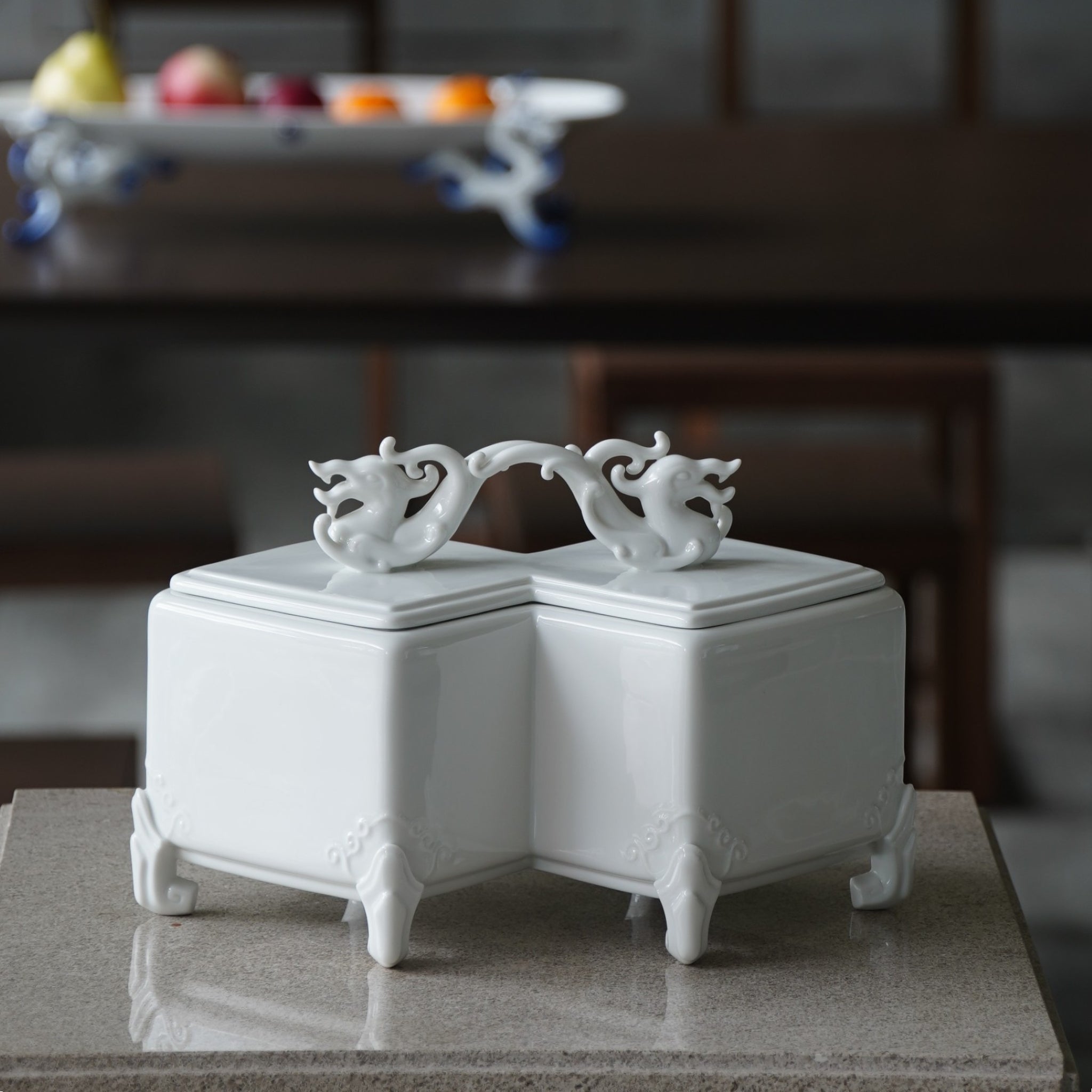
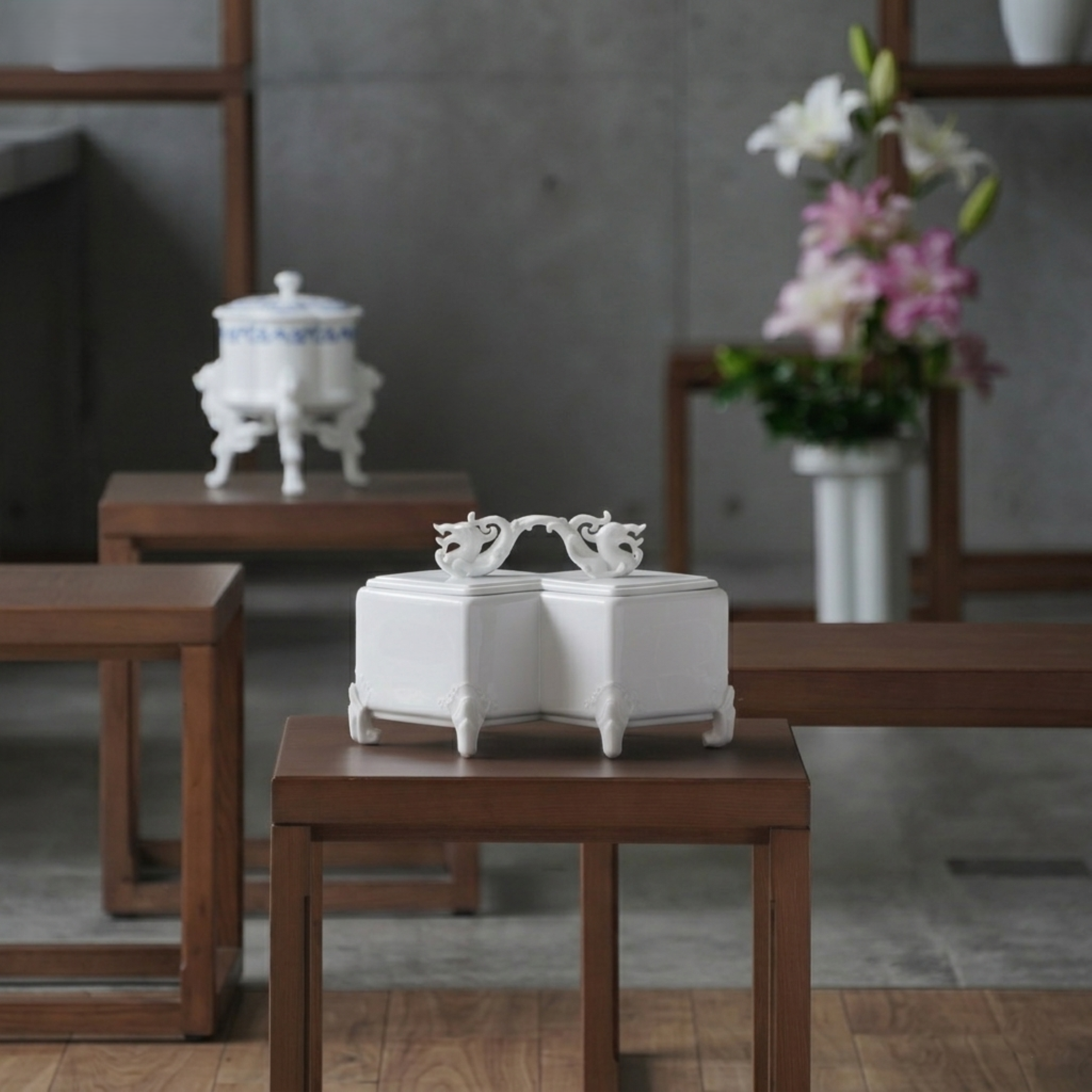
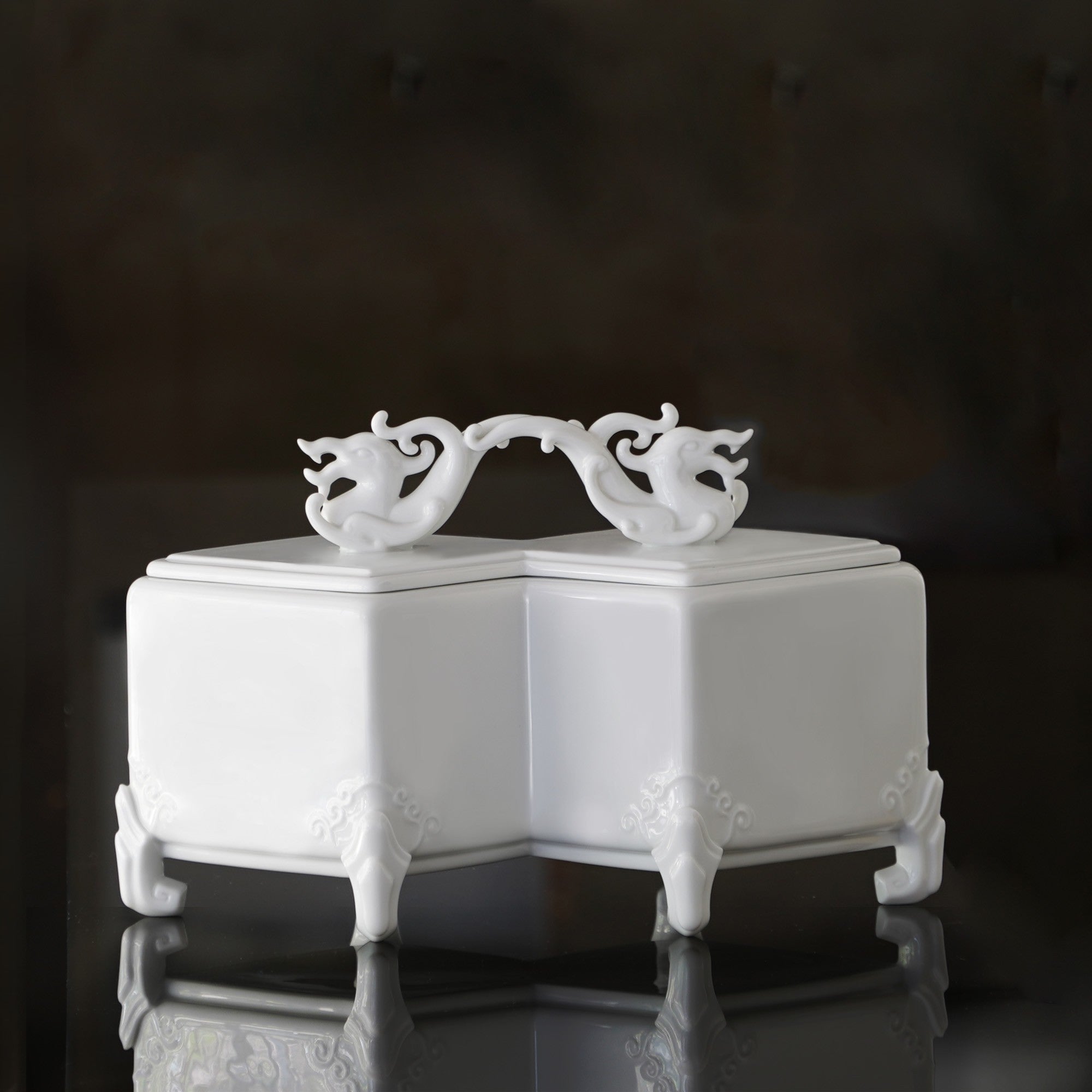
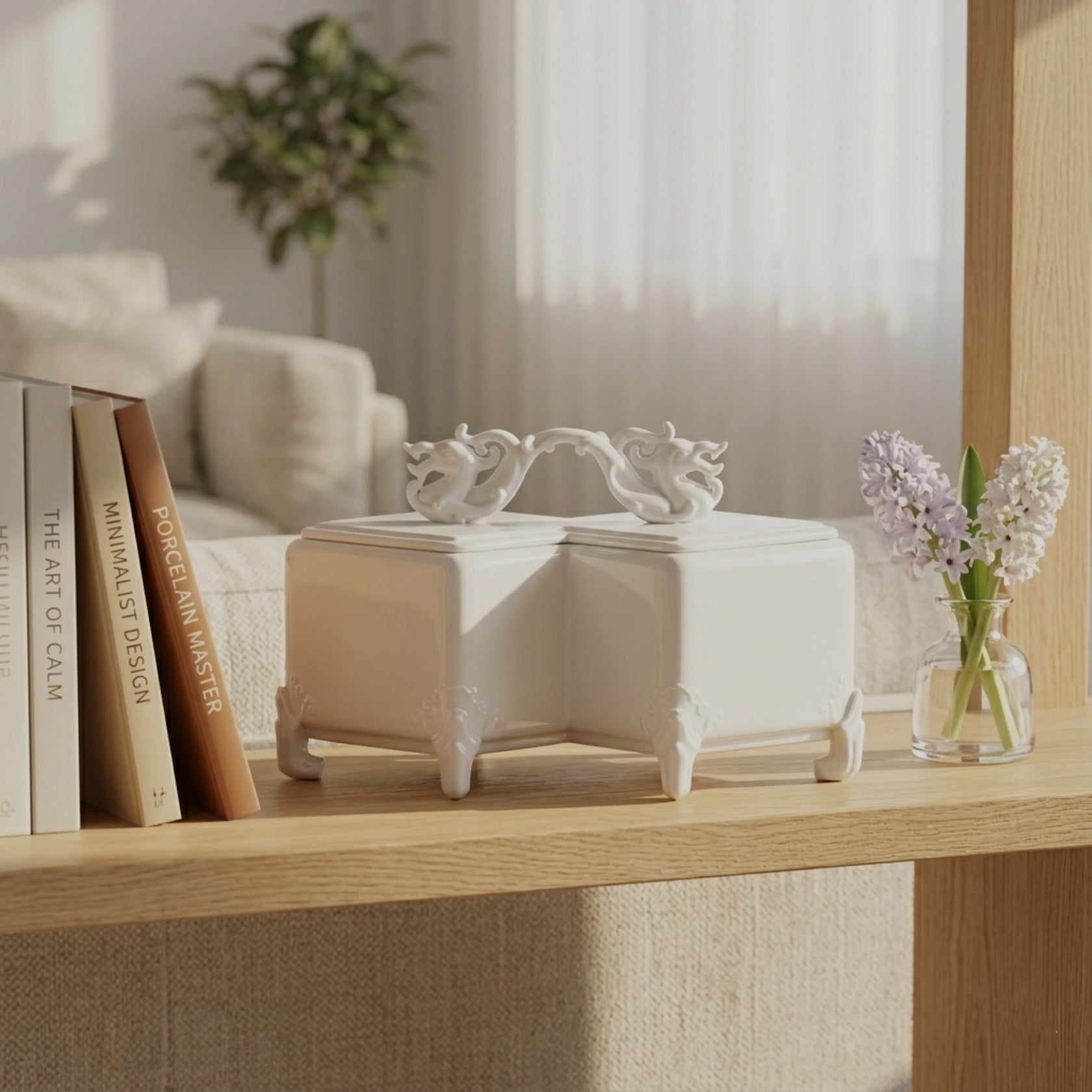
Glory Across Directions carries the deepest of wishes. The composed square form — stable, dignified, unhurried — is the image of a family culture built on solid, practical ground. The two square boxes intersecting to form a single piece is the aspiration for a next generation that moves through the world with open hearts and broad vision, expanding the territory of their lives and their work. Like the dragons on the lid — full of energy and beauty — the wish is for a person who moves through the world with the ambition of a dragon: building connections in every direction, opening new ground, laying the foundation for a future harvest.
The feet at each corner of the box stand with composure and ceremony — evoking the steadiness of a ceremonial vessel, the aspiration to build a foundation that will hold. The two dragons on the lid are lively and warm, arching toward each other with a fluid grace, carrying a quality of contemporary taste: a reminder that in all the maneuvering and negotiation of a life in the world, one must remain flexible and generous — loving others, treating people with propriety, pursuing goals and ideals with the disposition of one who is both outward-facing and inwardly grounded.
The work stands with elegance and quiet confidence, carrying the enduring gravity of a great hall — the warmth that will always be remembered, the rules of advance and retreat that must always be followed, the family culture that must be carried forward generation after generation. And like the latticed character for 富 (wealth), inlaid at the heart of the box with the most exacting craft, both the visible and the hidden will remain within the composed bearing of this work — surfacing, from time to time, to be noticed and savored.
About the Heirloom Series
Glory Across Directions is one work in NewChi Porcelain's Heirloom Series — designed by Heinrich Wang around the Confucian vision of family legacy, limited to 333 pieces worldwide.
The belief at the core of every piece in the Heirloom Series is this: an heirloom must be used. Only through daily interaction does an object transmit what it carries — not felt once, on the occasion it is given, but encountered again and again in the act of opening, handling, returning to its place. In that repetition, the deep expectations of a senior generation continue to speak.
Excerpted from Ming Bai Xue (明白學 — The Art of Clarity) by Heinrich Wang, published by Locus Publishing.