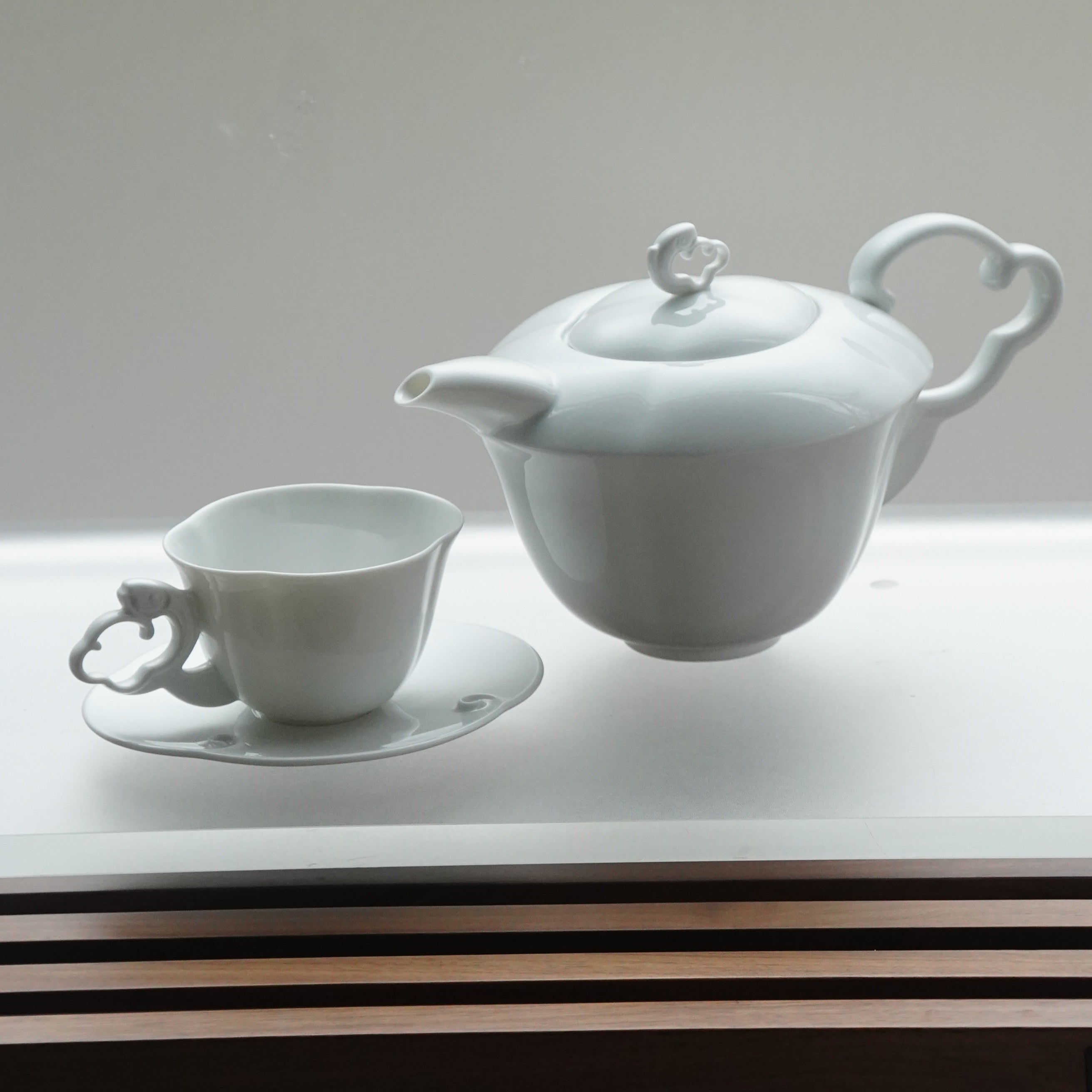
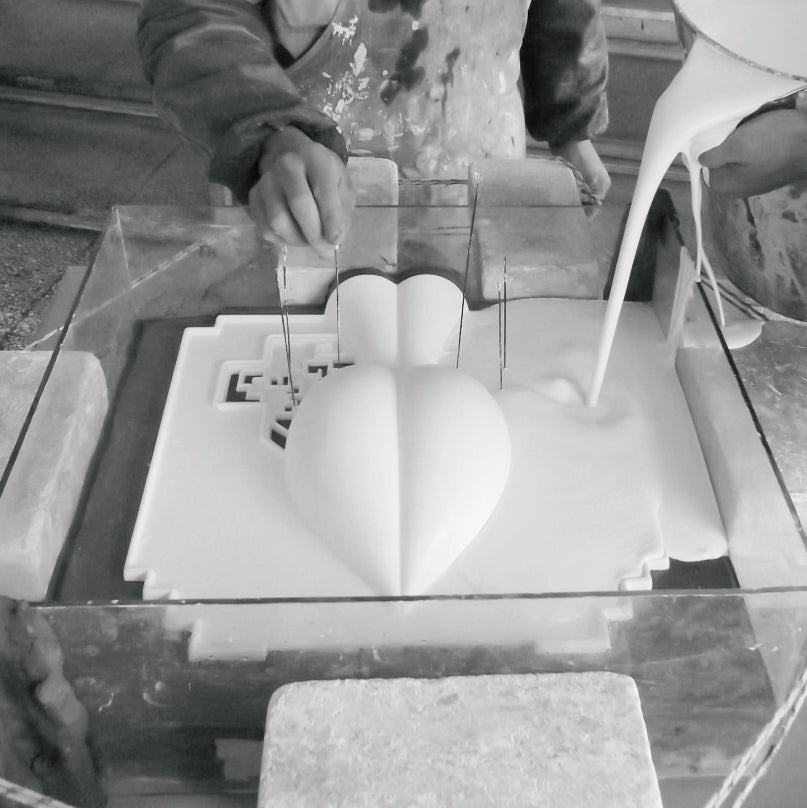
Ruyi form — the shape of wishes granted.
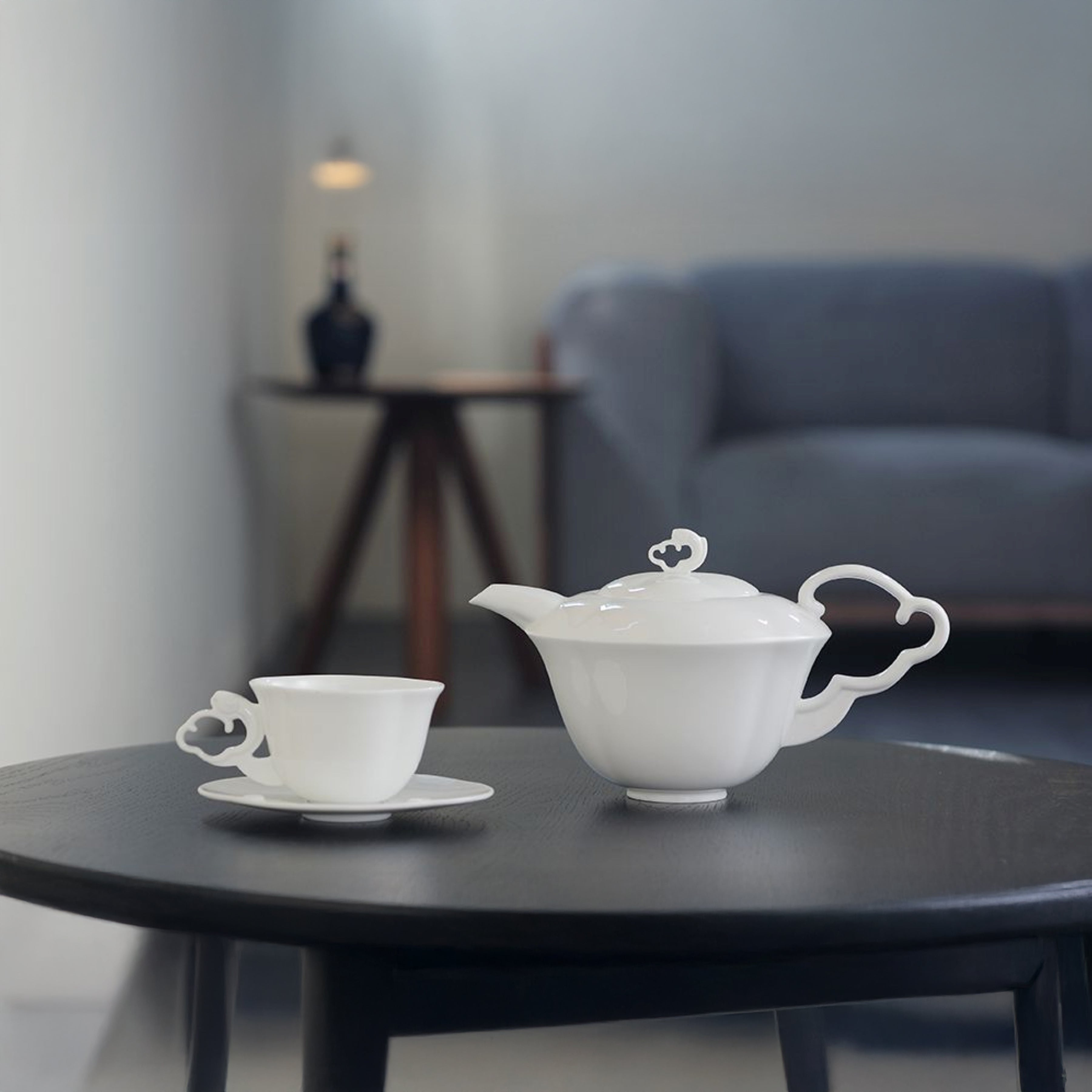
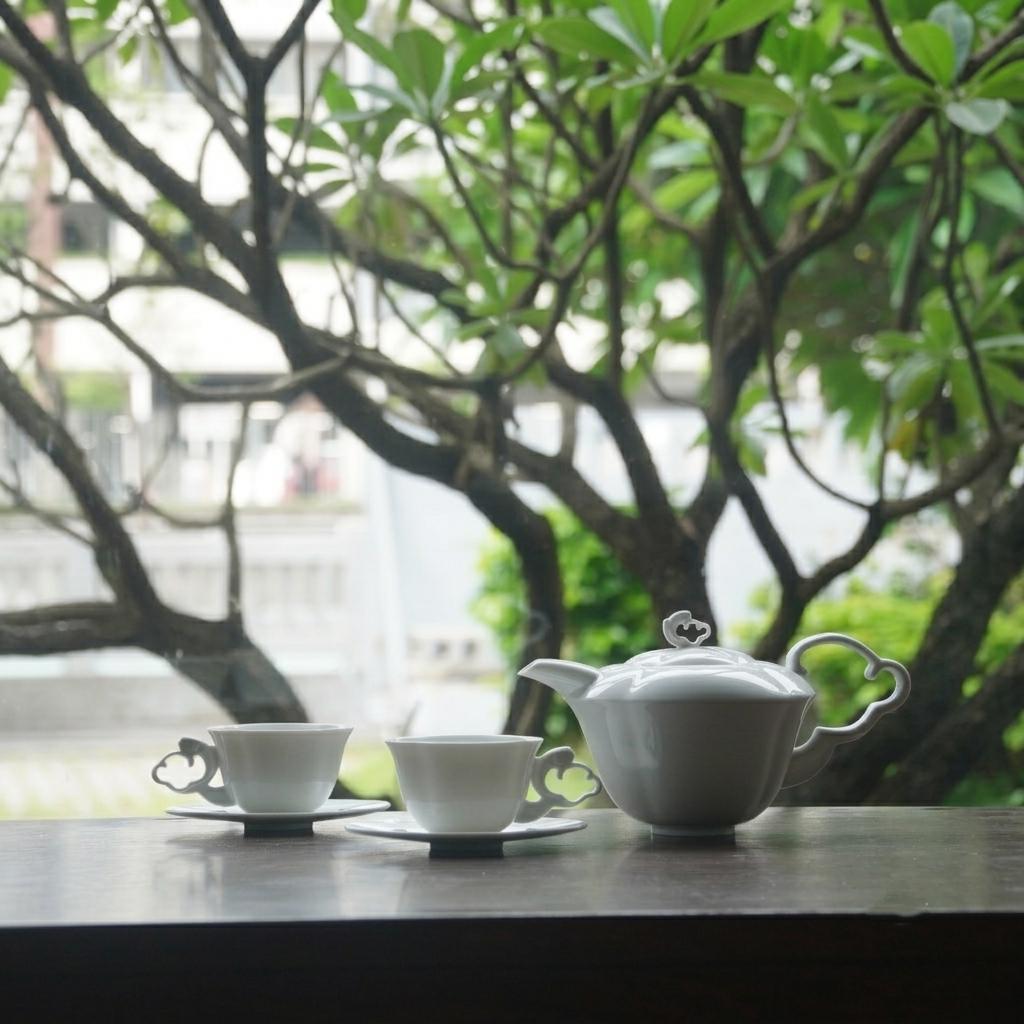
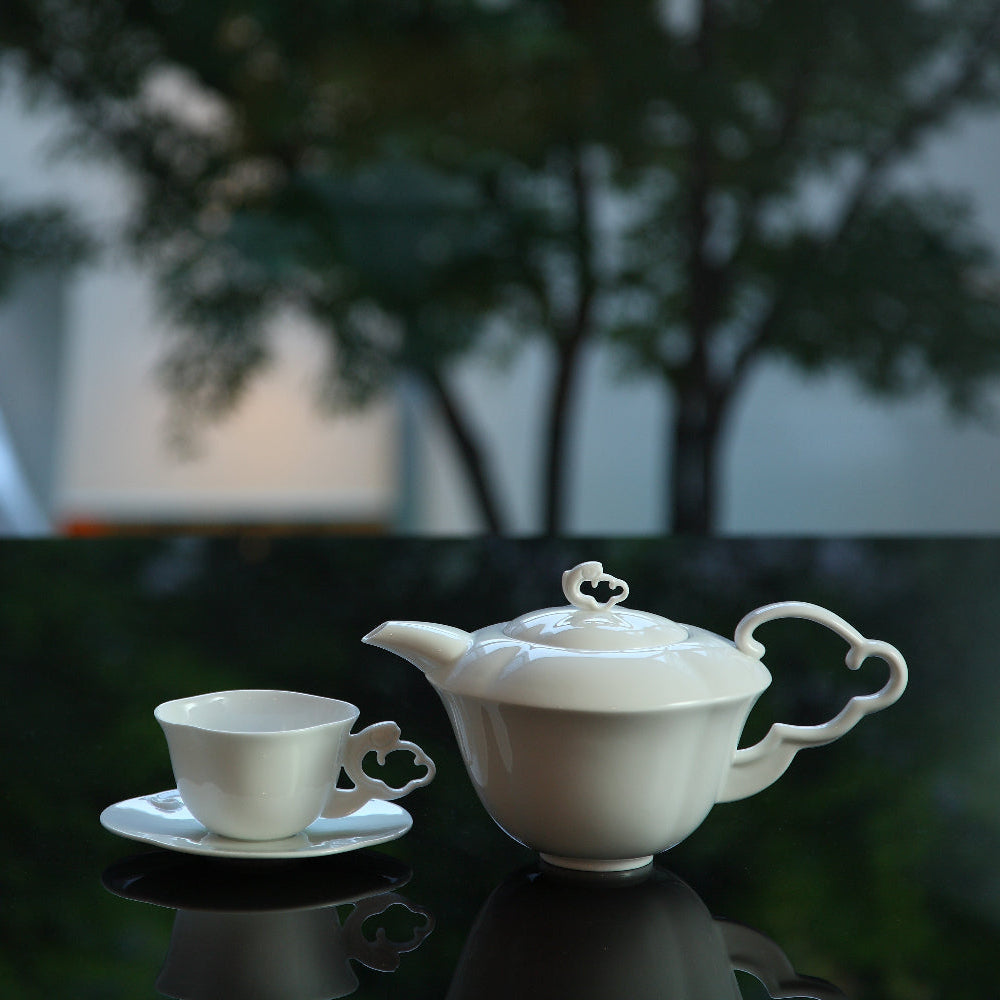
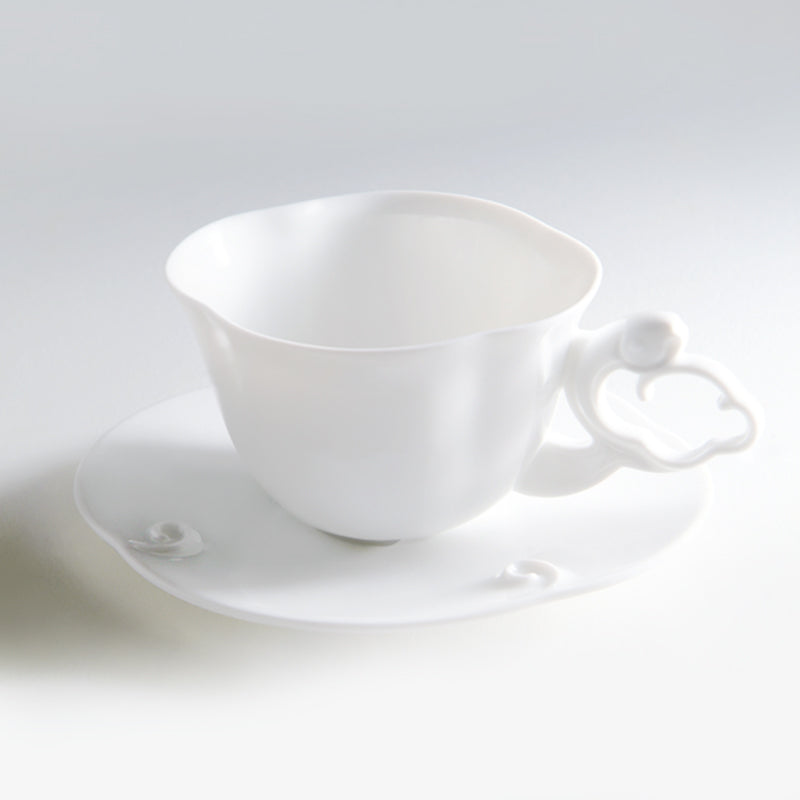
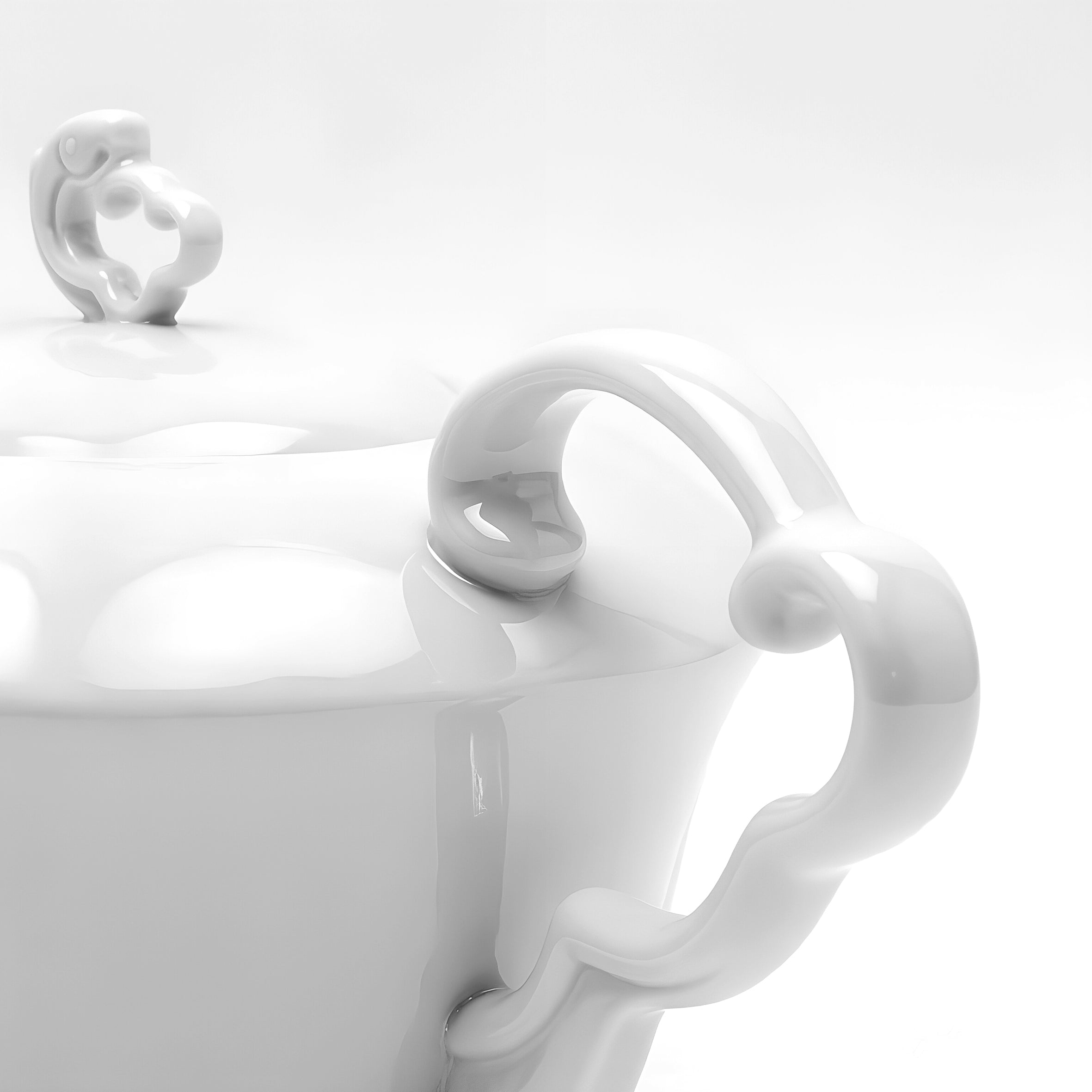
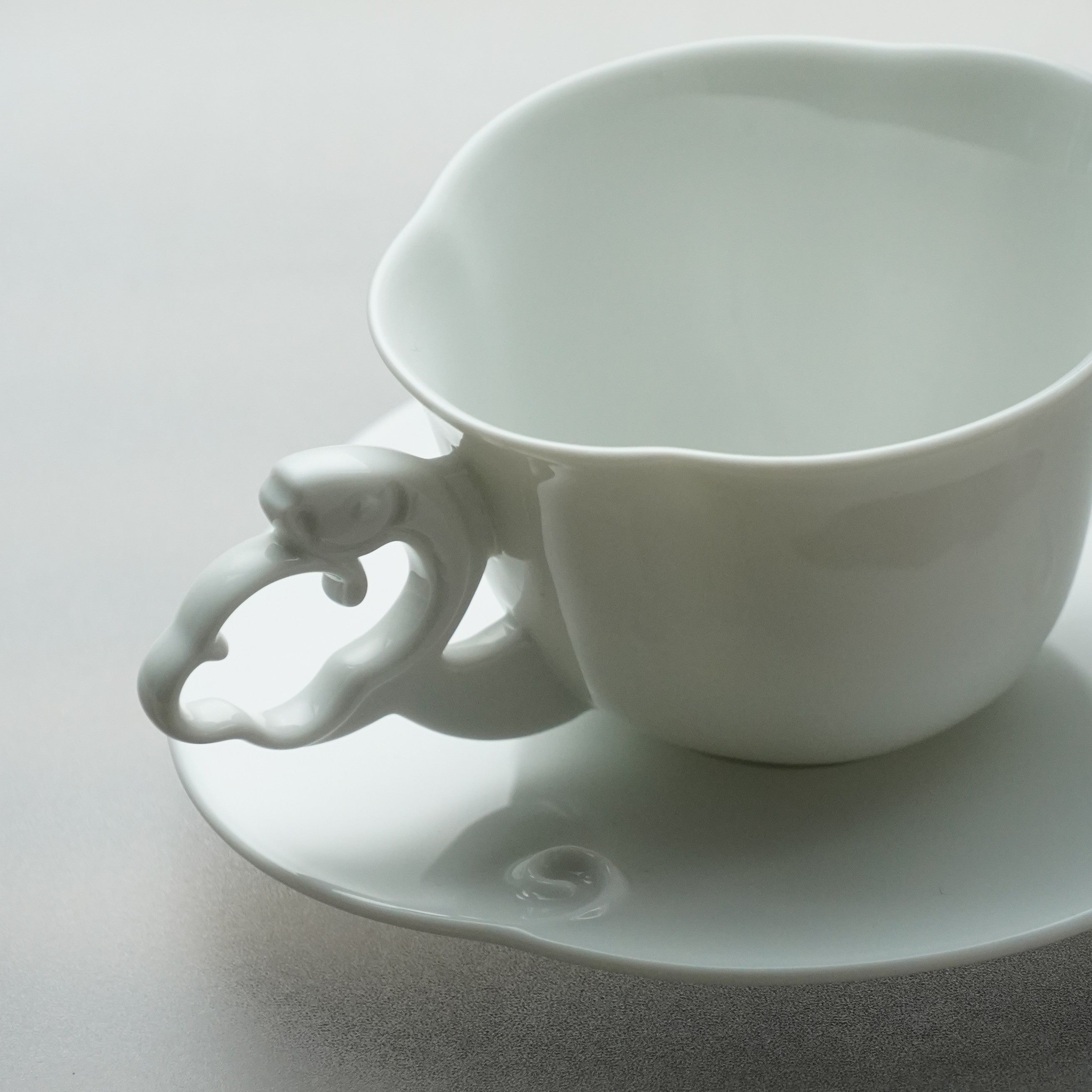
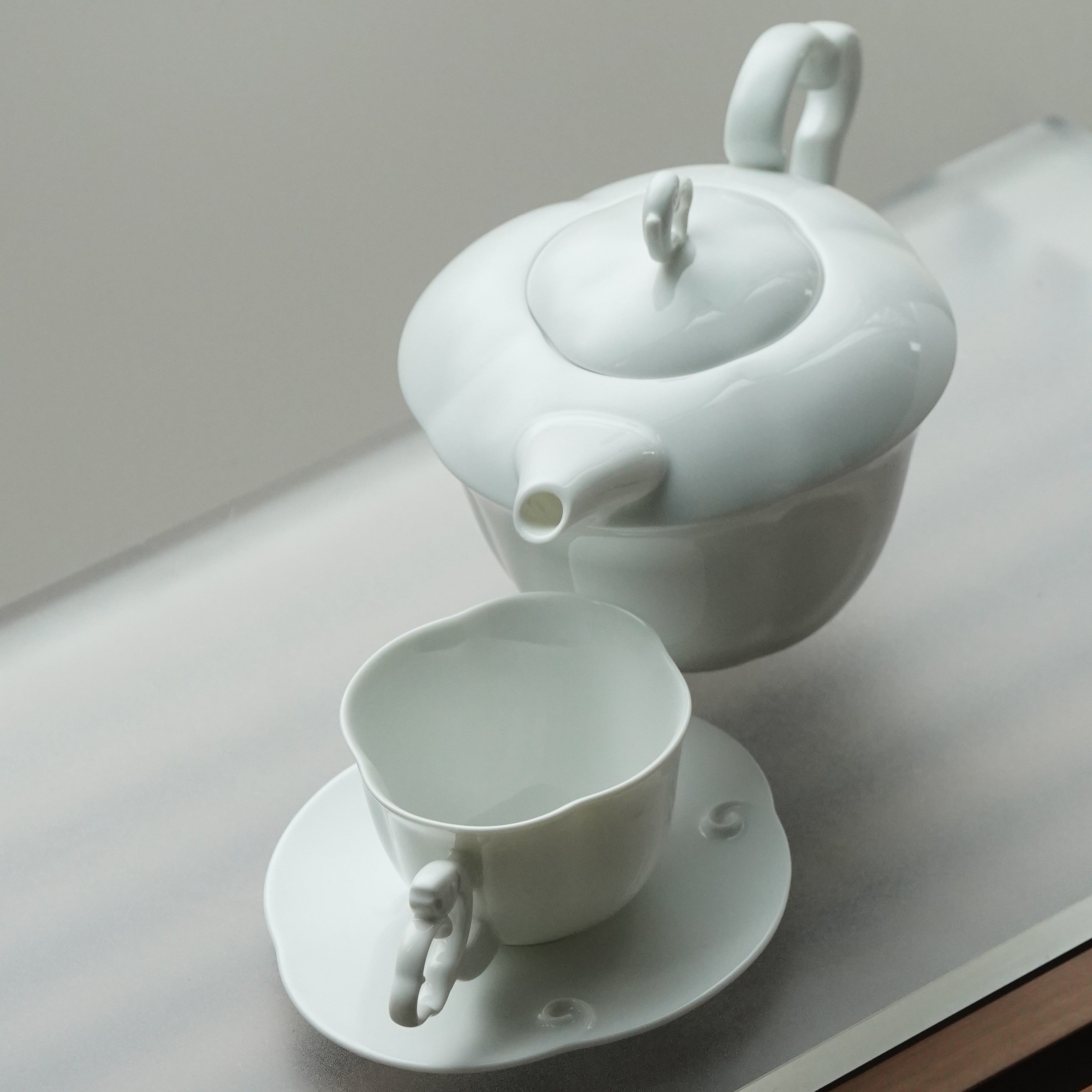
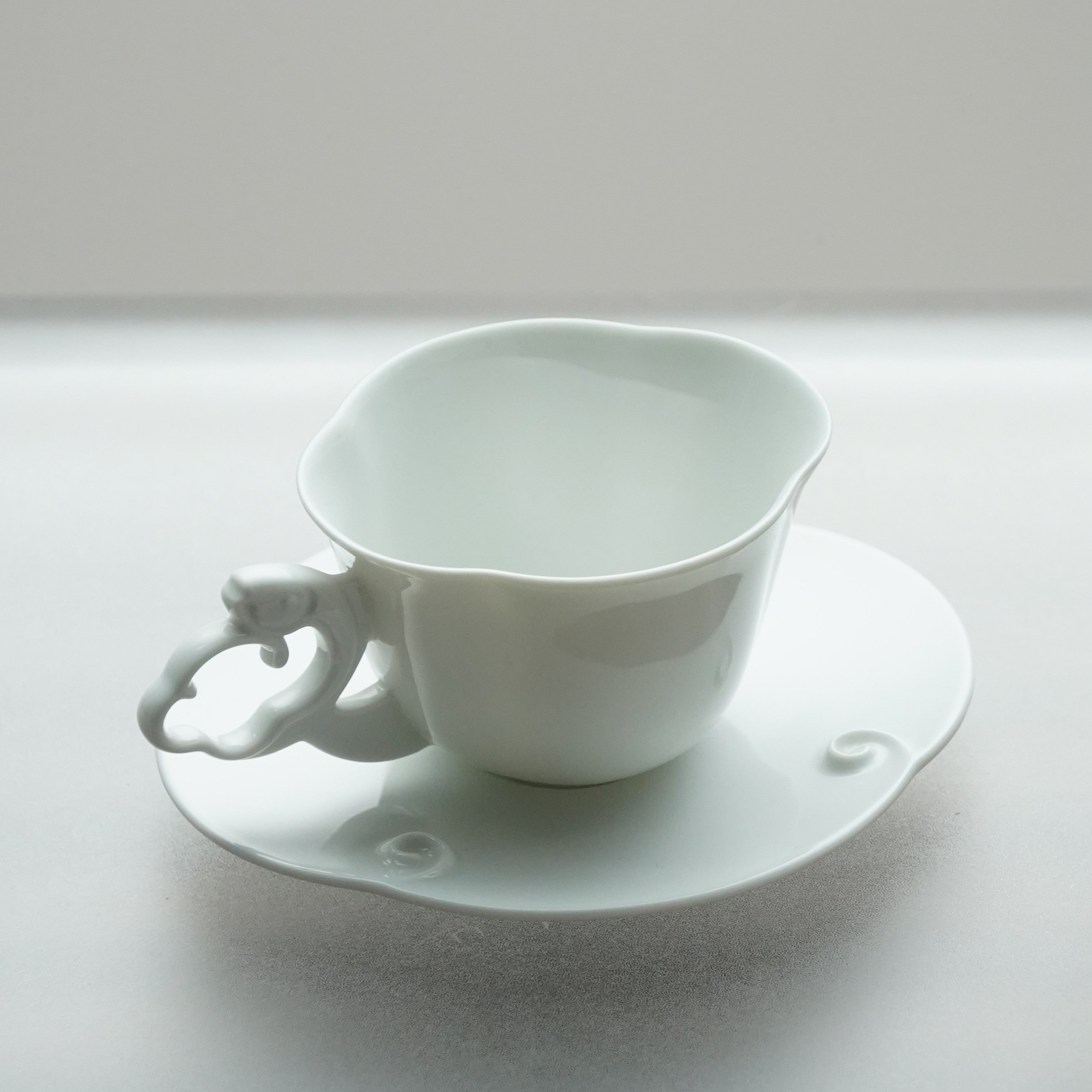
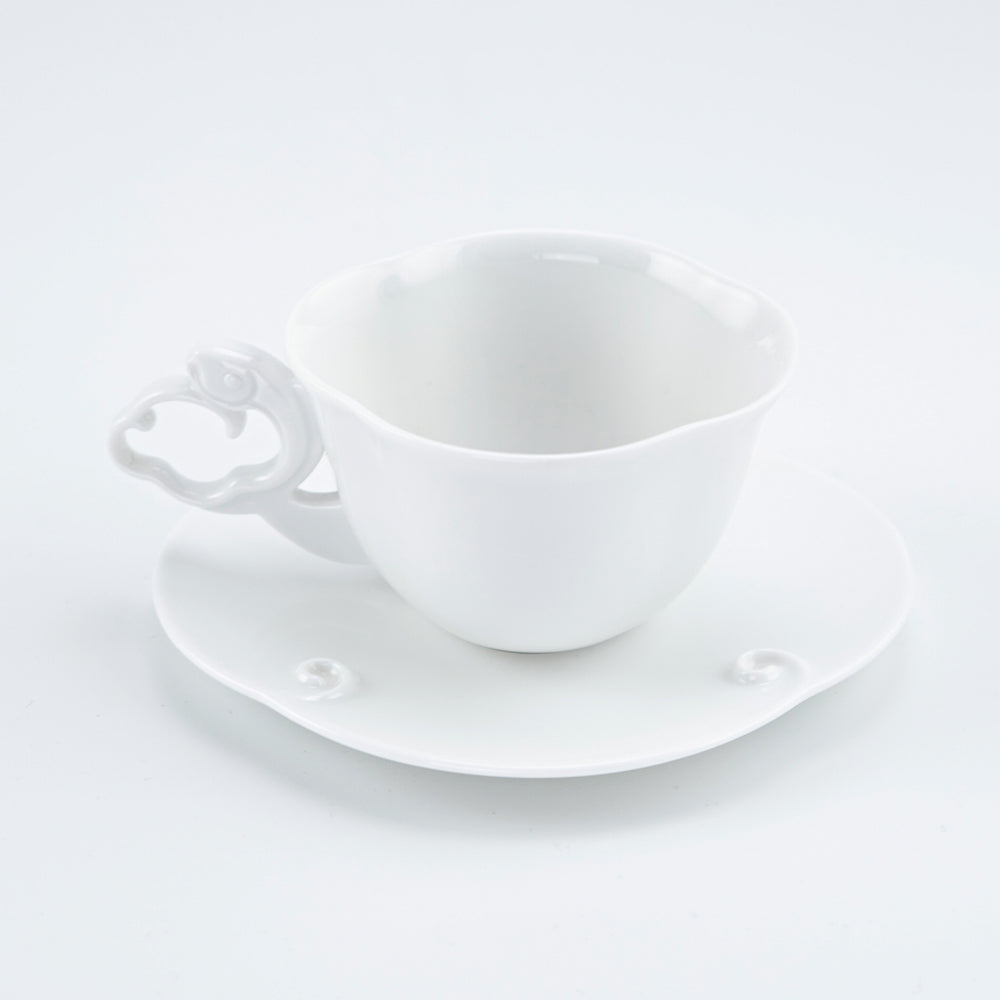
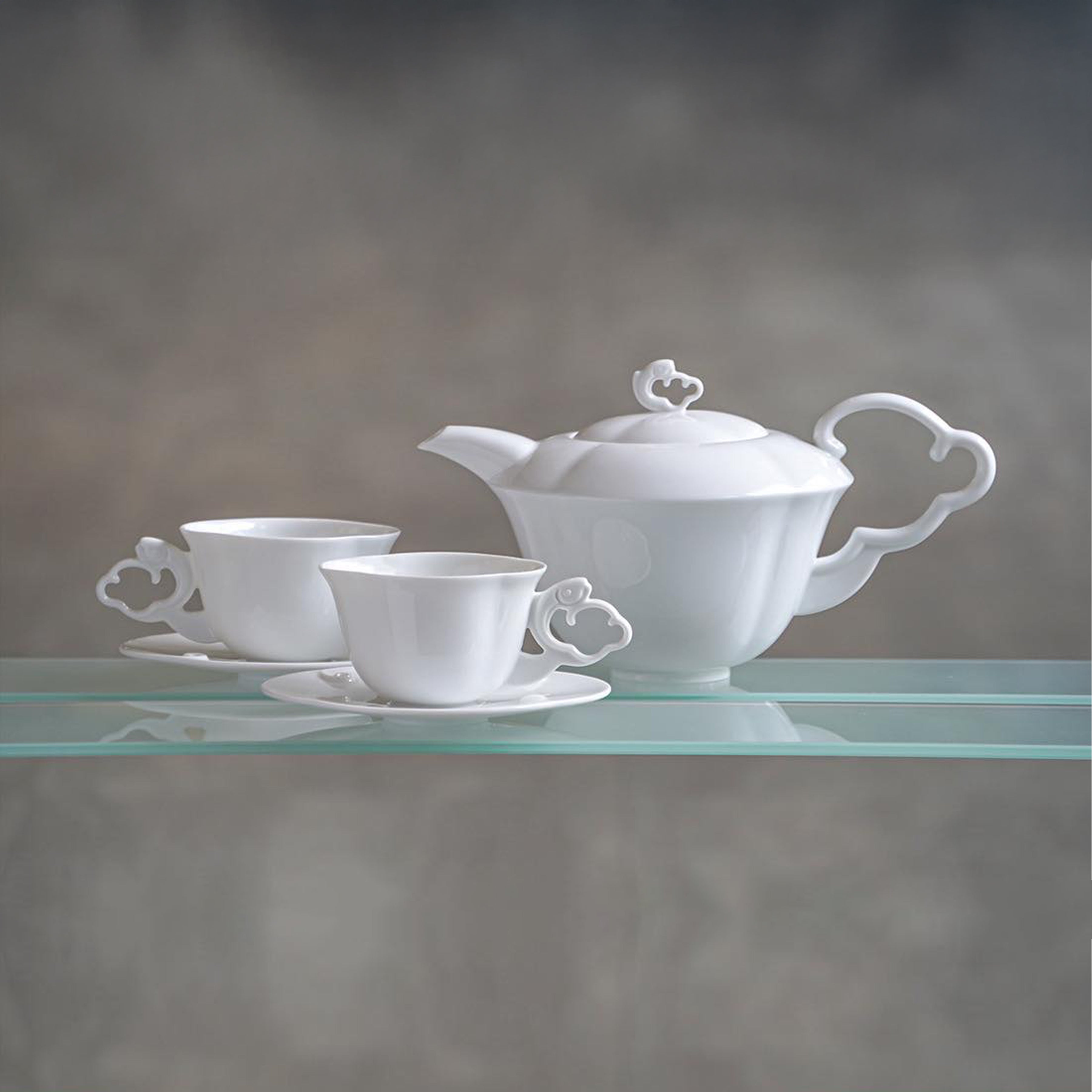
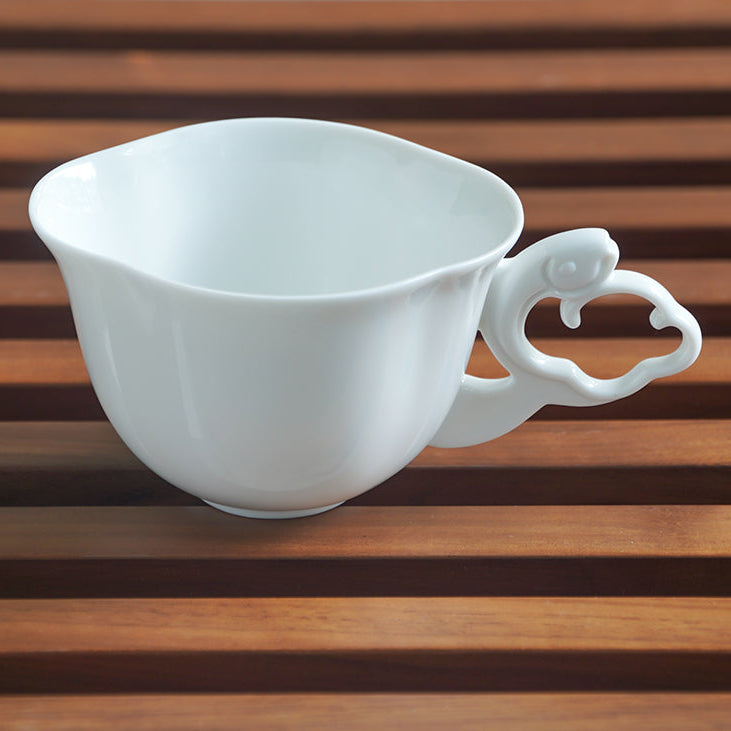
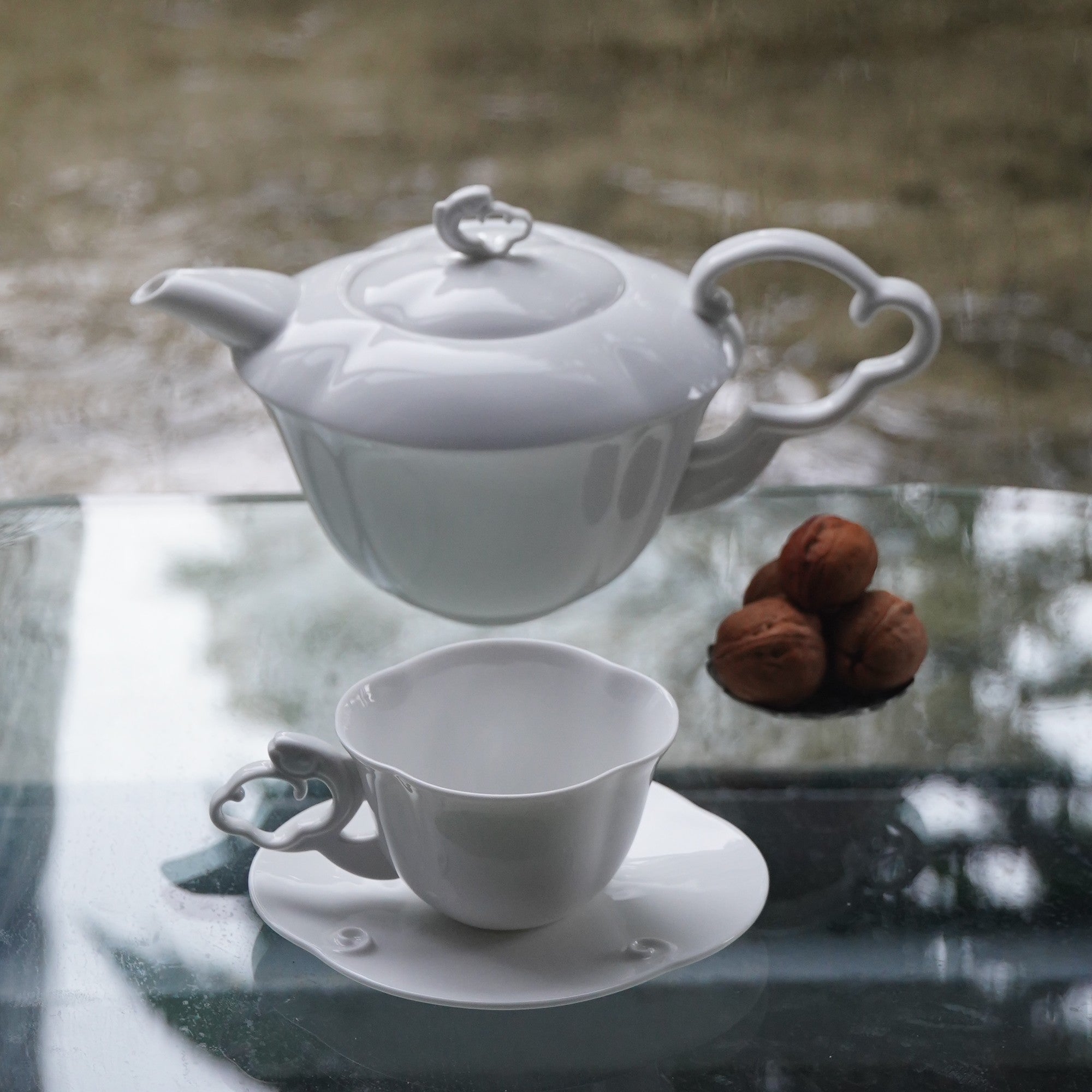
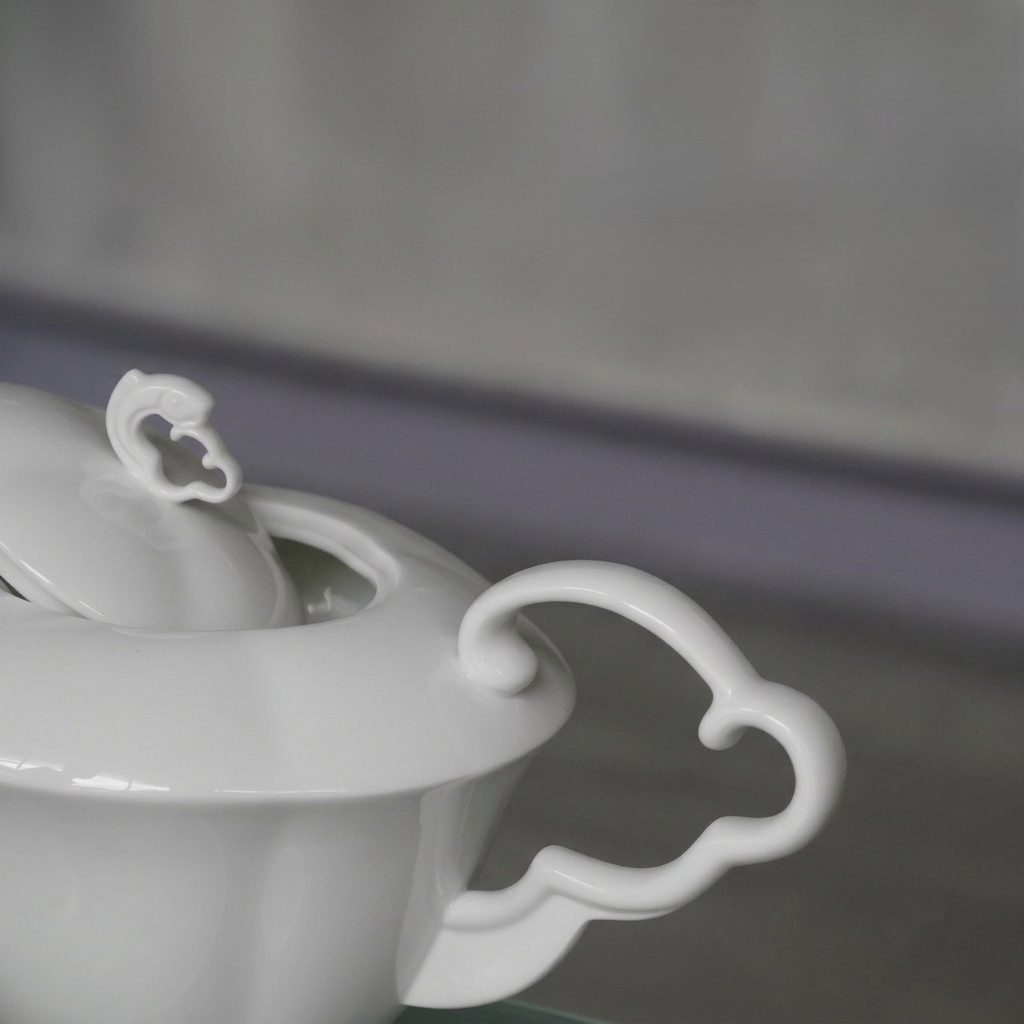
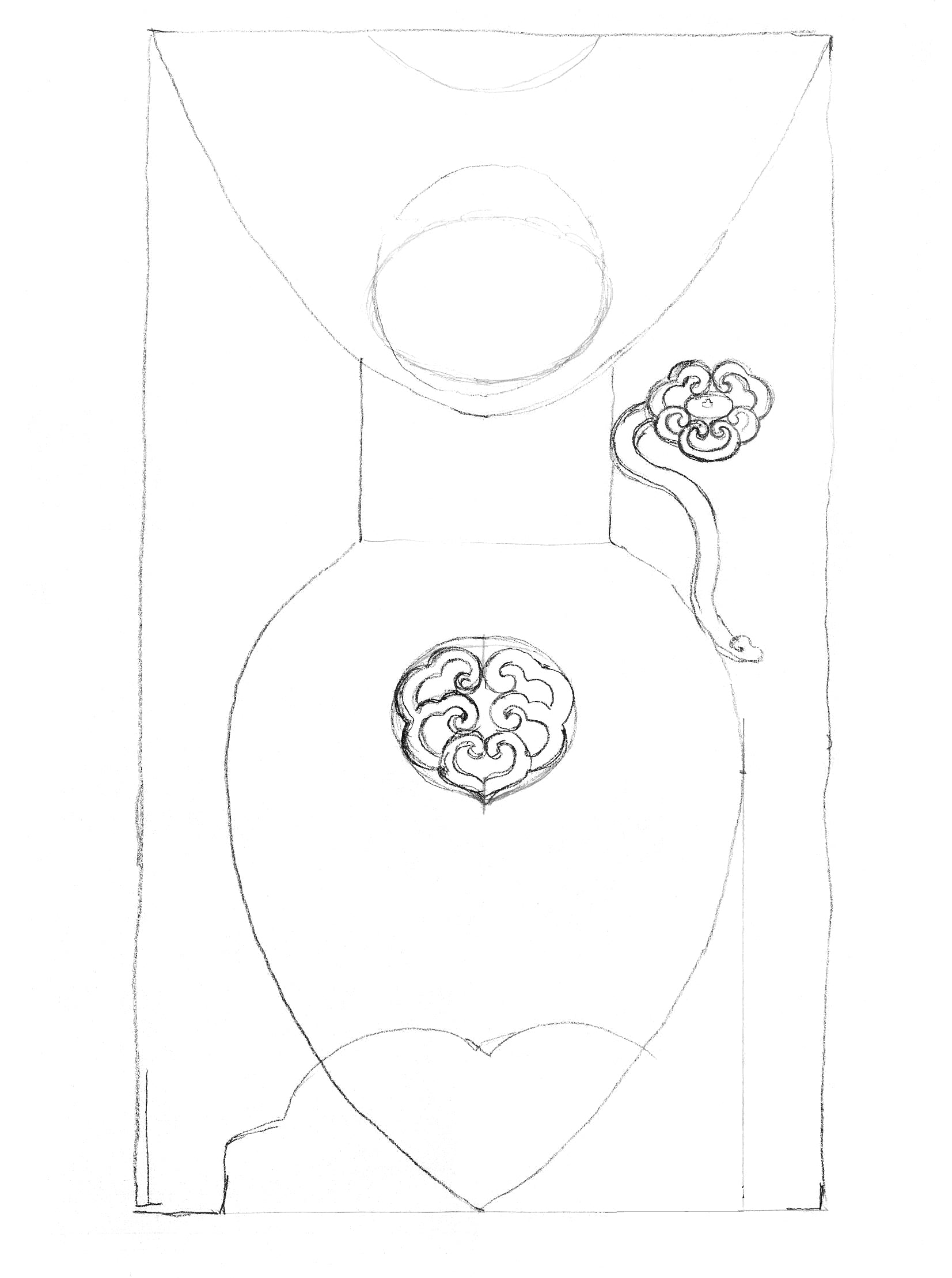
Every element of Dancing with the Sea takes its form from the ruyi (如意) — one of the most enduring auspicious symbols in Chinese cultural tradition, meaning "as you wish" or "as the heart desires." Heinrich Wang built the ruyi curve into the teapot body, the cup, and the saucer — so that the blessing is not applied as decoration, but embedded in the form itself. Every time the cup is held or the saucer is placed, the wish is present.
The leaping fish — courage hidden in the handle.
A small fish leaps from the base of the cup handle, carrying the traditional wish nián nián yǒu yú (年年有餘) — abundance year after year — and the spirit of something that moves forward through resistance. The detail is not immediately visible; you find it when you hold the cup. Like genuine courage, it does not announce itself. It is simply there, doing what it does.
Cloud-wave saucer — the sea, held still.
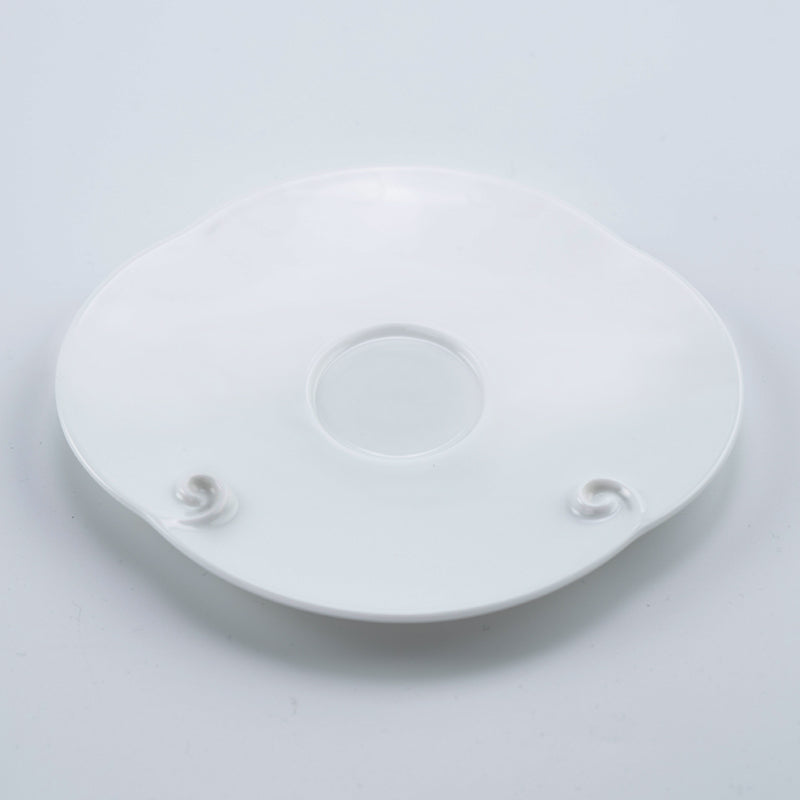
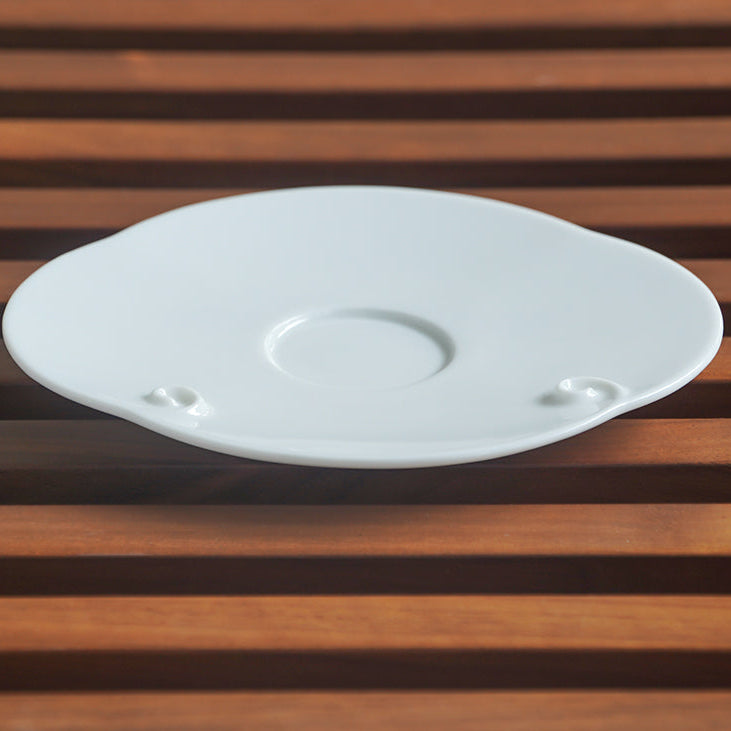
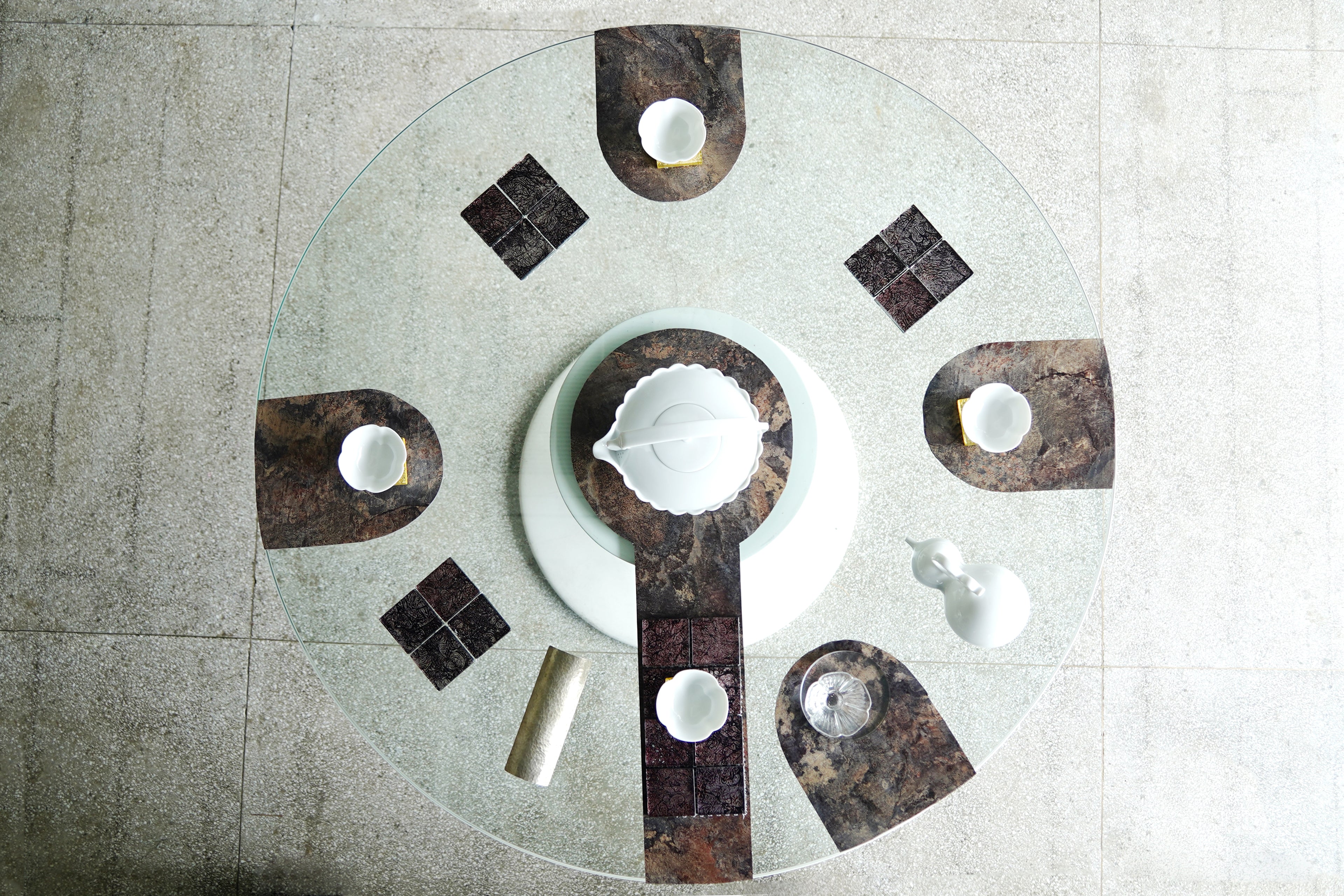
The saucer surface carries ruyi cloud-wave patterns — water's softness and forward energy captured in porcelain. Each time the cup is set down and lifted again, the gesture moves through that stillness. The porcelain does not move. The sea inside it does.
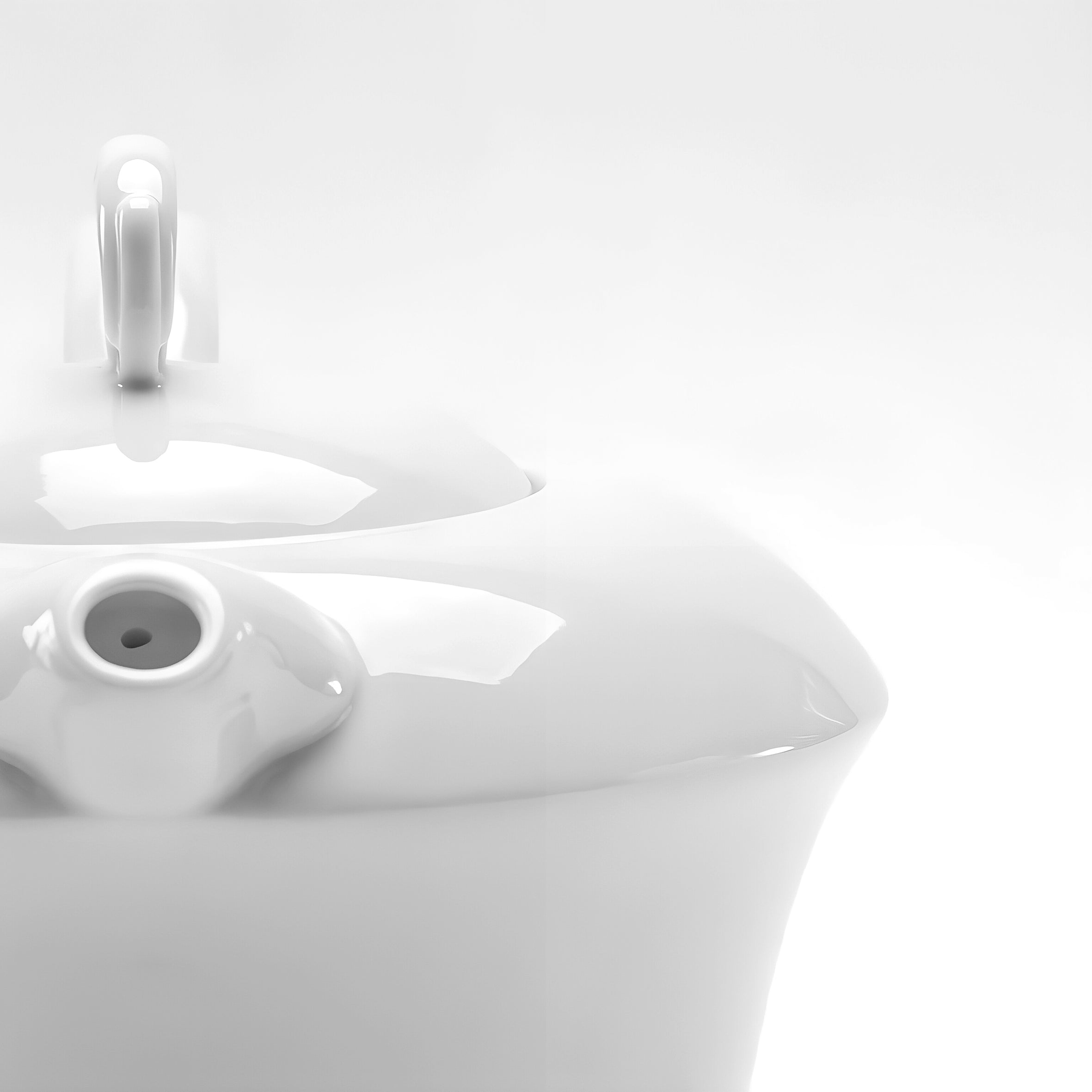
The teapot spout — ceremony begins with the pour.
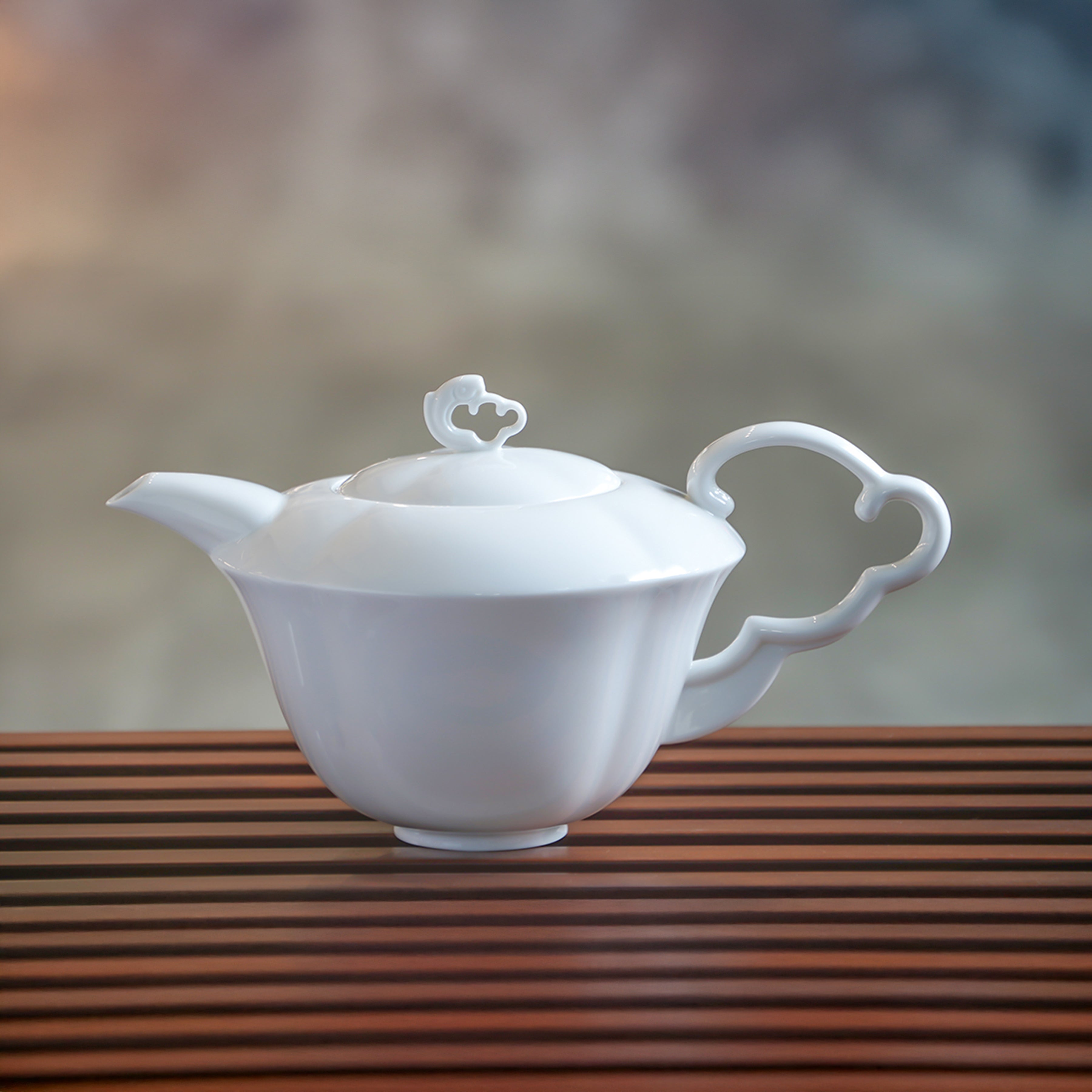
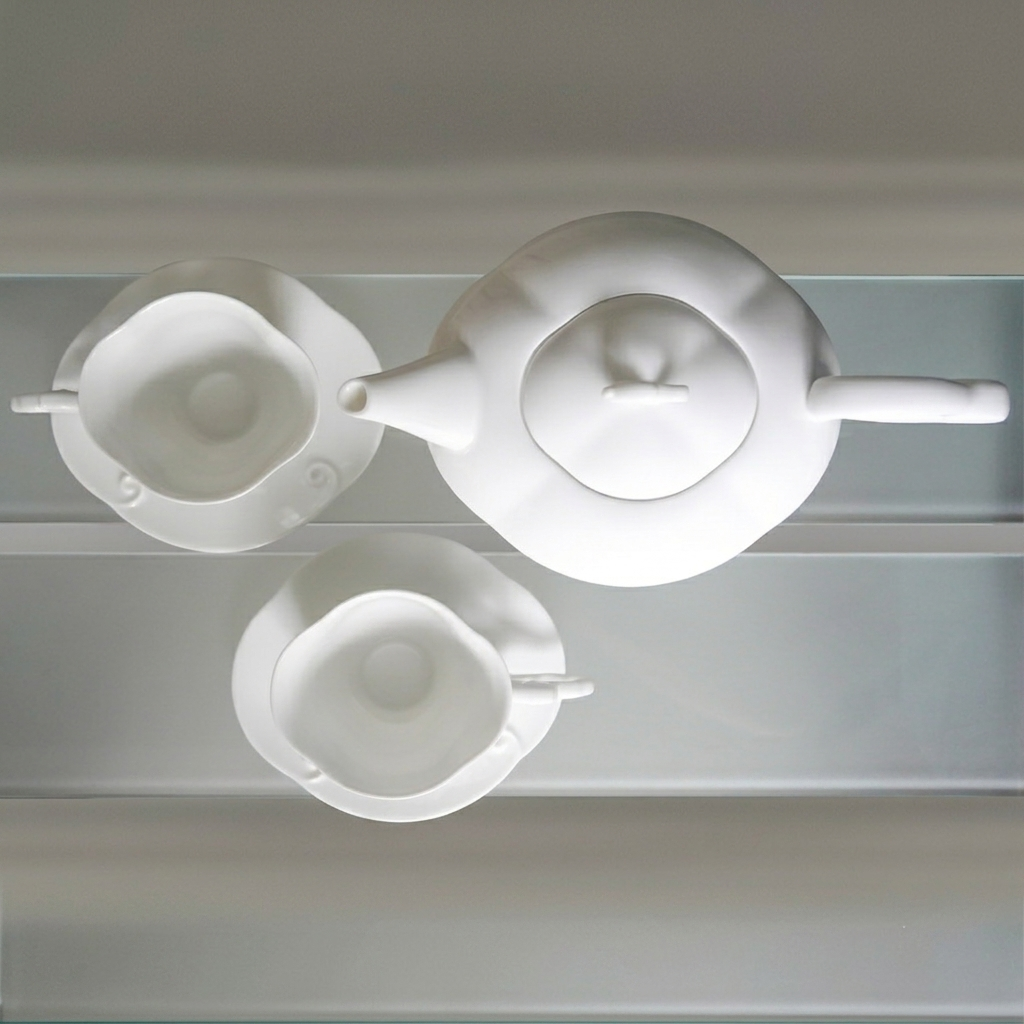
The teapot body is round and generous; the spout rises with the slight lift of a first wave. Every act of pouring enacts the design's philosophy: not forcing, not straining, but moving with the momentum that is already there.